Buy Alpha Amylase for Baking Operations
Improve dough handling, oven spring, and starch conversion with industrial amylase supplied in bulk for food, feed, and process buyers.
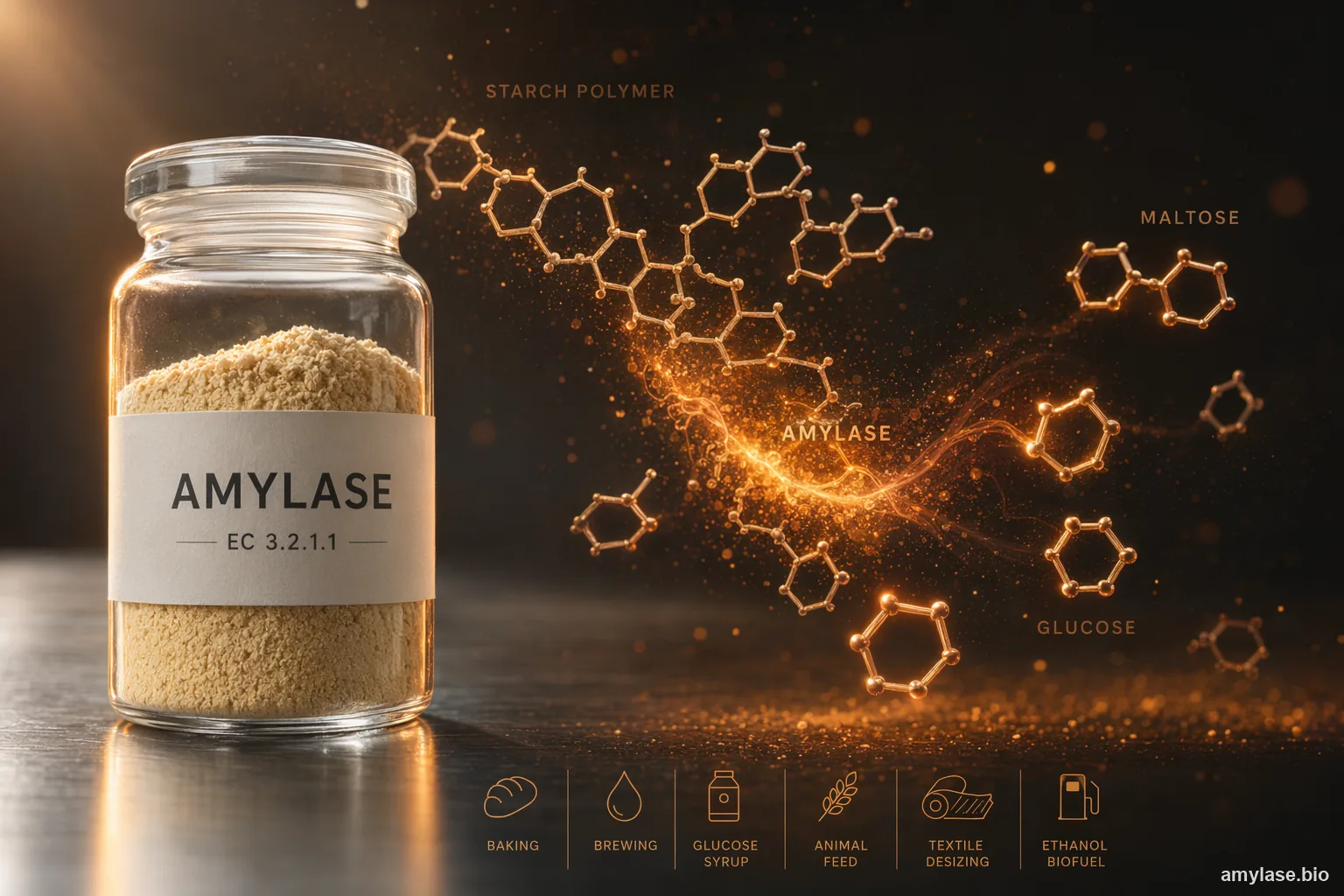
In industrial baking, consistent dough handling, optimal crust development, and shelf-life control are critical for meeting production efficiency and quality goals. Variability in flour starch conversion—due to crop quality or milling—can affect fermentable sugar levels, altering proofing times and texture. Alpha amylase offers a targeted solution by hydrolysing starch into dextrins and fermentable sugars, improving dough machinability and reducing variability. Our general-purpose alpha amylase, sourced from Aspergillus oryzae and Bacillus subtilis, performs across baking and wider starch-processing applications. Available in multiple activity grades (10,000–100,000 U/g), it can be matched to recipe, substrate, and thermal profile. In bakery systems, it supports dough extensibility, oven spring, crust colour, and slower staling. In starch liquefaction, it lowers viscosity and prepares slurry for saccharification; in brewing, feed, textiles, and biofuel, it helps unlock more value from grain- and tuber-based raw materials. For the textile use, this German-language page on enzymatic desizing covers gentle removal of starch size. Procurement teams evaluate amylase on activity, pH tolerance, heat stability, packaging, certifications, and delivered cost. Bulk procurement ensures stable supply, clear specs, and predictable results. Whether comparing enzyme price, determining dosage for baking, or sourcing for other starch-based processes, matching the grade to your process window is key. This guide outlines use cases, specifications, and sourcing considerations to help buyers secure reliable alpha amylase aligned with technical requirements.
Bakery dough conditioning
In bread and bun production, alpha amylase converts flour starch into smaller sugars yeast can utilise more efficiently. This enhances dough extensibility, gas retention, oven spring, and crust colour, and can slow crumb firming. Common addition rates are 10–100 ppm on flour, adjusted based on flour quality and process conditions.
Starch liquefaction for syrup plants
For glucose and fructose syrup production, alpha amylase is the primary liquefying enzyme that reduces starch viscosity and generates dextrins for saccharification. Used at 80–95 °C and pH 5.5–6.5, it improves pumping, heat transfer, and stability for downstream conversion.
Brewing and distilling support
In adjunct brewing with corn, rice, or sorghum, alpha amylase supplements malt enzymes and improves starch breakdown in the mash. This increases extract yield, reduces residual starch, and enhances consistency across grist formulations. Mash conversion commonly occurs in the 62–72 °C range.
Feed and biofuel processing
Feed and ethanol plants use alpha amylase to enhance starch digestibility and reduce slurry viscosity before fermentation. In feed, it boosts energy availability for poultry, swine, and aquaculture diets. In biofuel, it enables smoother handling and more complete saccharification of thick grain or tuber slurries.
| Parameter | Value |
| Activity range | 10,000 – 100,000 U/g (multiple grades) |
| Optimal pH | 4.5 – 7.0 |
| Optimal temperature | 55°C – 95°C (grade dependent) |
| Appearance | Light yellow to brown powder or liquid |
| Shelf life | 12 months (sealed, cool, dry place) |
Frequently Asked Questions
Where can I buy amylase enzyme for industrial use?
Amylase enzymes can be purchased from suppliers offering multiple activity grades, bulk packaging, and technical documentation. The most efficient approach is to request quotes tailored to your application, substrate, and process conditions. This ensures the grade matches your operating pH, temperature, and dosage requirements. Commercial pack sizes such as 25 kg fiber drums, 30 kg jerricans, or bulk quantities are standard for continuous production.
What is the right dosage for amylase in baking?
Dosage depends on flour strength, enzyme activity, dough system, and product goals. A common starting range is 10–100 ppm on flour, refined through pilot trials. Weak starch quality or low-protein flours may need careful optimisation to prevent overly soft dough or sticky crumb. Confirm activity units, dough temperature, and proofing time before standardising a plant-scale dosage.
How does alpha amylase pricing work?
Pricing is influenced by activity grade, formulation type, order volume, and packaging. High-activity grades can reduce in-use dosage, but cost per kilogram is only part of the equation. Comparing cost per batch or per tonne of finished product gives a clearer picture. Certifications, lead time, shipping terms, and shelf life also affect landed cost for industrial buyers.
What process conditions does this amylase support?
This general-purpose enzyme operates effectively within pH 4.5–7.0 and temperatures of 55°C–95°C, depending on grade. It suits baking, mash conversion, liquefaction, and other starch-based processes. For operations outside these ranges, technical validation helps match grade selection to your thermal profile and substrate load.
Do you supply food-grade documentation and bulk formats?
Yes. Food-grade status, batch traceability, and storage guidance are standard for qualifying suppliers. Commercial formats include 25 kg fiber drums, 30 kg jerricans, and bulk supply. Certifications such as ISO 9001, HALAL, KOSHER, and Food Grade support compliance and audit requirements in domestic and export-oriented manufacturing.
Request Bulk Alpha Amylase Pricing
Send three things: the product or grade (alpha or beta, Aspergillus or Bacillus, powder or liquid), the quantity per order or per year, and the destination country. Add your application and target pH/temperature window if you know them. We'll match the grade, send a free 100 g sample with COA and quote bulk pricing within 24 hours.
Request a QuoteRequest Bulk Alpha Amylase Pricing
We have received your message. We will reply by email.
Or email hello@mail.amylase.bio