
Amylase Enzyme Specifications
| Enzyme Name | Amylase (General-Purpose) (EC 3.2.1.1 / EC 3.2.1.2) |
| Activity | Multiple grades available |
| Optimal pH | 4.5 – 7.0 |
| Optimal Temperature | 55°C – 95°C (grade dependent) |
| Appearance | Light yellow to brown powder or liquid |
| Source | Aspergillus oryzae / Bacillus subtilis |
| Shelf Life | 12 months (sealed, cool, dry place) |
| Packaging | 25 kg fiber drums / 30 kg jerricans / bulk |
| MOQ | 25 kg |
| Certifications | ISO 9001, HALAL, KOSHER, Food Grade |
Why Source From Us
Dual-source flexibility
Choose Aspergillus oryzae for food-grade mid-temperature processing or Bacillus subtilis for high-temperature starch liquefaction up to 95 °C. Match the grade to your process window without changing suppliers.
Documentation ready
COA, TDS, ISO 9001, HALAL, KOSHER, and Food Grade certificates supplied per lot. Your QA team gets the full technical file set promptly.
Multiple activity grades — powder and liquid
Select the activity level that fits your conversion target, solids load, and residence time. Powder and liquid formats are available for diverse plant handling setups.
Procurement-ready
Packaged in 25 kg fiber drums, 30 kg jerricans, or bulk supply. MOQ starts at 25 kg and shelf life is 12 months when sealed, cool, and dry.
Frequently Asked Questions
What does the amylase enzyme do?
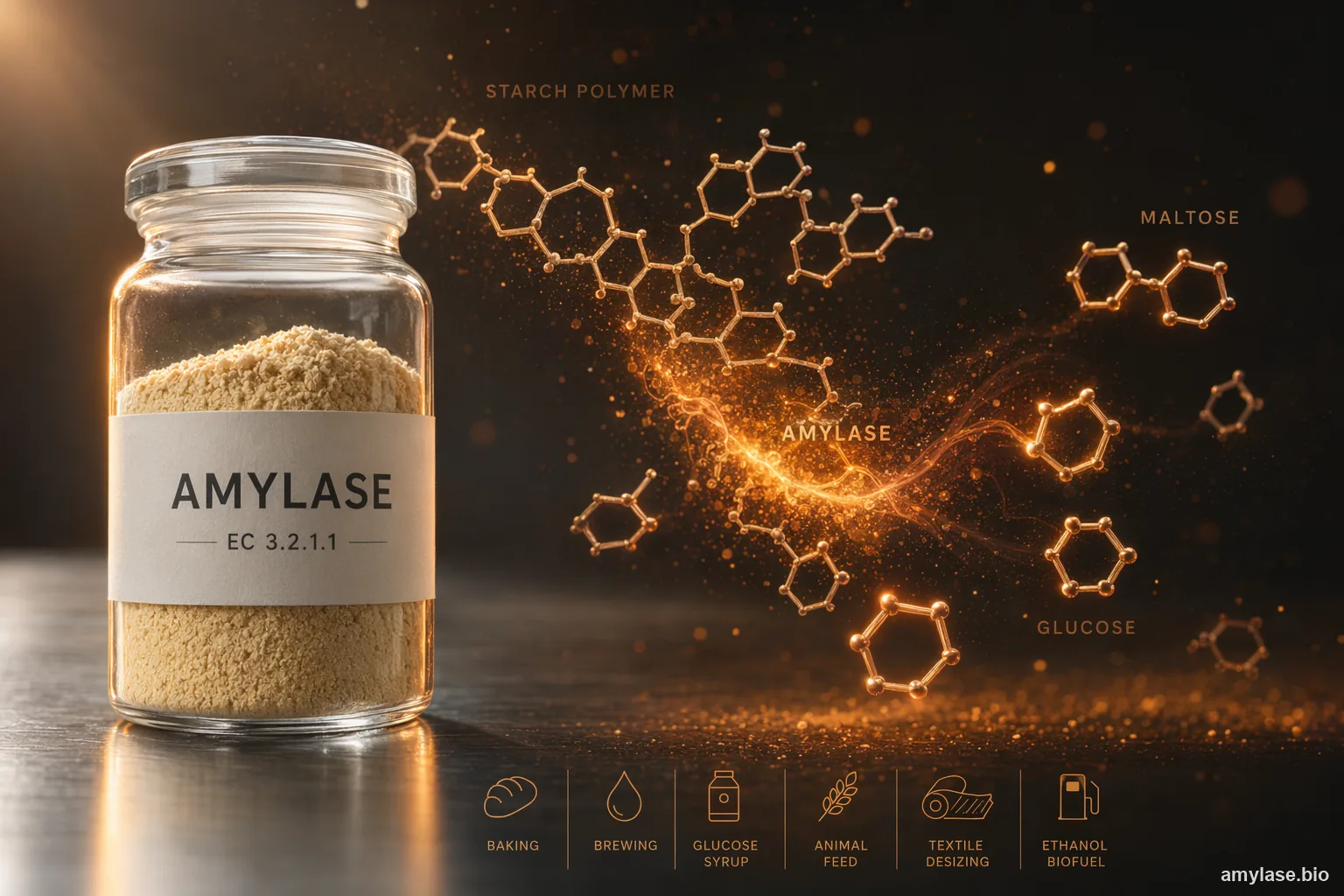
It hydrolyses α-1,4 glycosidic bonds in starch and glycogen, producing dextrins, maltose, and maltotriose. In industrial processing, amylase enzyme is a core tool for liquefaction, mash conversion, and starch-to-sugar workflows.
What is the substrate of amylase?
The substrate of amylase is starch, including starch-based slurries from grains and tubers. In practical plant use, substrate composition affects viscosity drop, conversion rate, and final sugar profile.
What is the difference between alpha-amylase and beta-amylase?
Alpha-amylase is endo-acting and cuts internal α-1,4 bonds for rapid viscosity reduction. Beta-amylase is exo-acting and removes maltose units from non-reducing ends. Together they define enzyme behavior in brewing, baking, and syrup production.
Is amylase food grade?
Yes. Food Grade supply is available and documentation can include ISO 9001, HALAL, and KOSHER certificates. Confirm your required standard and we will match the lot documents accordingly.
Can I use amylase enzyme for brewing or distilling?
Yes. Brewing grades suit adjunct mashing with rice, corn, or sorghum. Typical starting range is 0.05–0.2% w/w on grist, at pH 5.2–5.8 and 62–72 °C for saccharification. Contact us for application-specific dosing guidance.
What pH and temperature does amylase need?
Industrial grades operate best at pH 4.5–7.0 and 55–95 °C, depending on source organism and process design. Aspergillus oryzae grades suit mid-range conditions; Bacillus subtilis grades are selected for hotter liquefaction steps.
Does amylase come in powder or liquid?
Yes. Supplied as light yellow to brown powder or liquid, depending on grade and your plant's dosing system. Packaging options include 25 kg fiber drums, 30 kg jerricans, and bulk supply.
What certifications and documentation ship with every order?
Each lot is supplied with COA and TDS, plus ISO 9001, HALAL, KOSHER, and Food Grade documentation for qualified orders. Share your QA requirements so we can align the file set before shipment.
Contact
Request a Wholesale Quote
Send three things: the product or grade (alpha or beta, Aspergillus or Bacillus, powder or liquid), the quantity per order or per year, and the destination country. Add your application and target pH/temperature window if you know them. We'll match the grade, send a free 100 g sample with COA and quote bulk pricing within 24 hours.
- hello@mail.amylase.bio
- Response within 24 hours
- Ships to 80+ countries
Request a Wholesale Quote
We have received your message. We will reply by email.