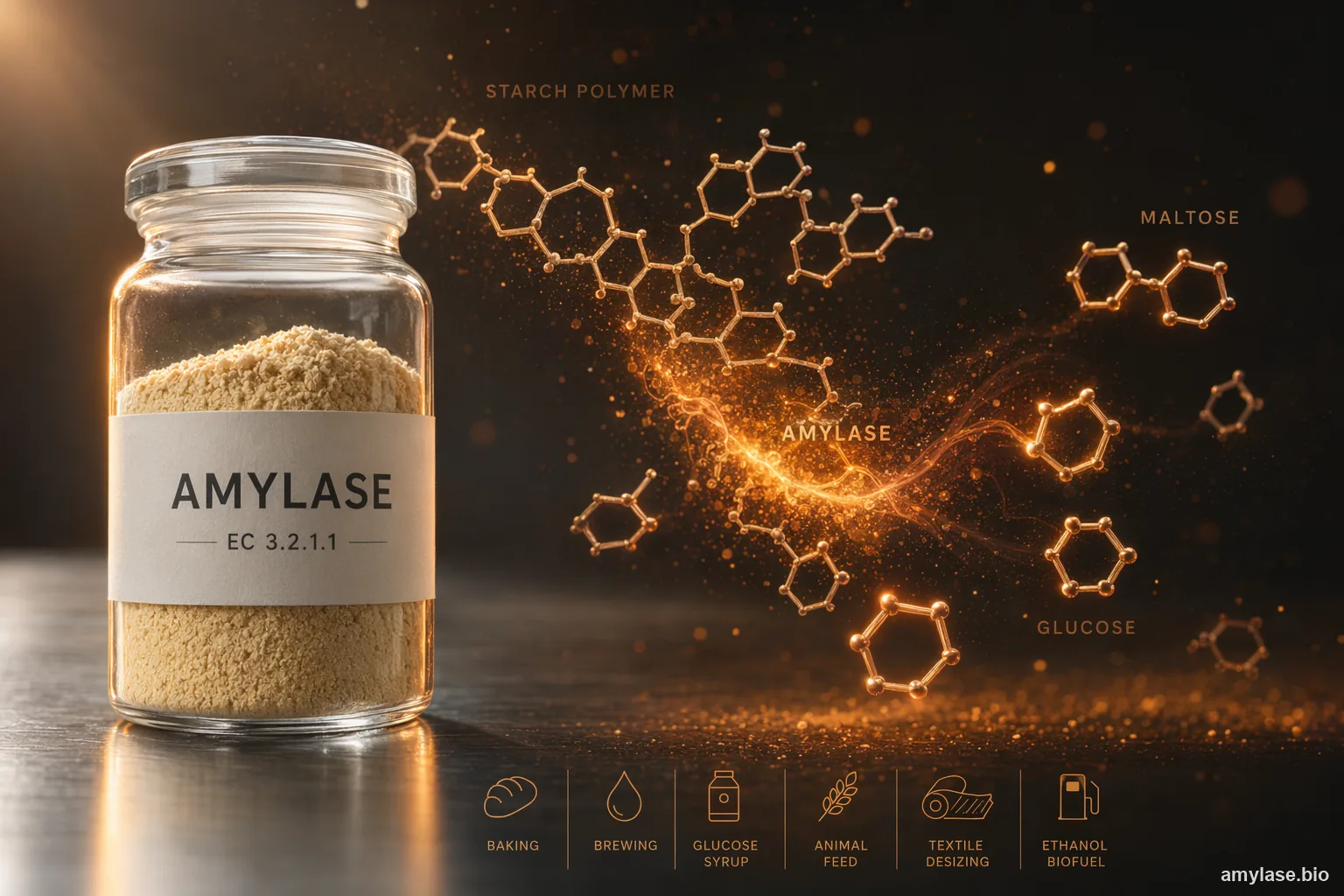
Alpha Amylase Enzyme Brewing: Specification Checklist for Buyers
Compare alpha amylase enzyme brewing specs: pH, temperature, dosage, COA/TDS/SDS, QC checks, pilot validation, and supplier qualification.
A practical procurement guide for breweries comparing industrial amylase enzyme options for starch conversion, yield control, and consistent wort processing.
Why Alpha Amylase Is Compared Differently in Brewing
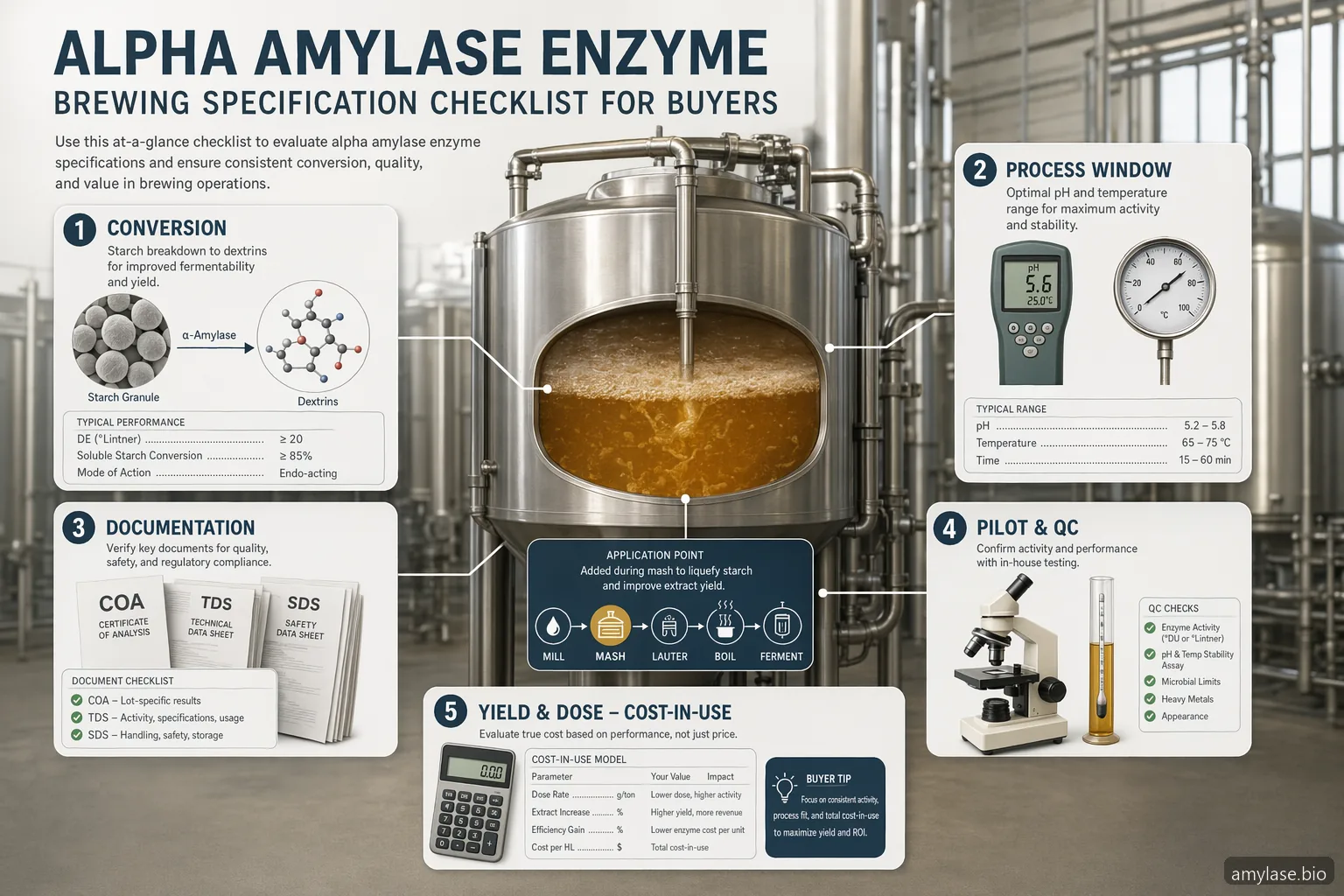
For brewing buyers, alpha amylase enzyme brewing selection is not simply a question of activity units. The enzyme amylase family hydrolyzes starch, but each commercial preparation has a specific temperature profile, pH optimum, stability window, carrier system, and recommended point of addition. In mashing, alpha amylase helps reduce starch viscosity and generate dextrins that can be further converted into fermentable sugars. In high-adjunct brewing, it may support consistent extract when raw barley, corn, rice, sorghum, or other starch sources vary in gelatinization behavior. A procurement comparison should therefore start with the process: mash-in temperature, cereal cooker use, rest profile, wort filtration constraints, and target attenuation. The best amylase enzyme is the one that performs predictably under your actual brewhouse conditions, not the one with the highest headline activity.
Compare performance at your mash pH, not only at laboratory optimum. • Separate liquefaction needs from fermentability or attenuation targets. • Confirm whether the product is designed for brewing, food processing, or broader industrial use.
Core Process Conditions to Put on the Checklist
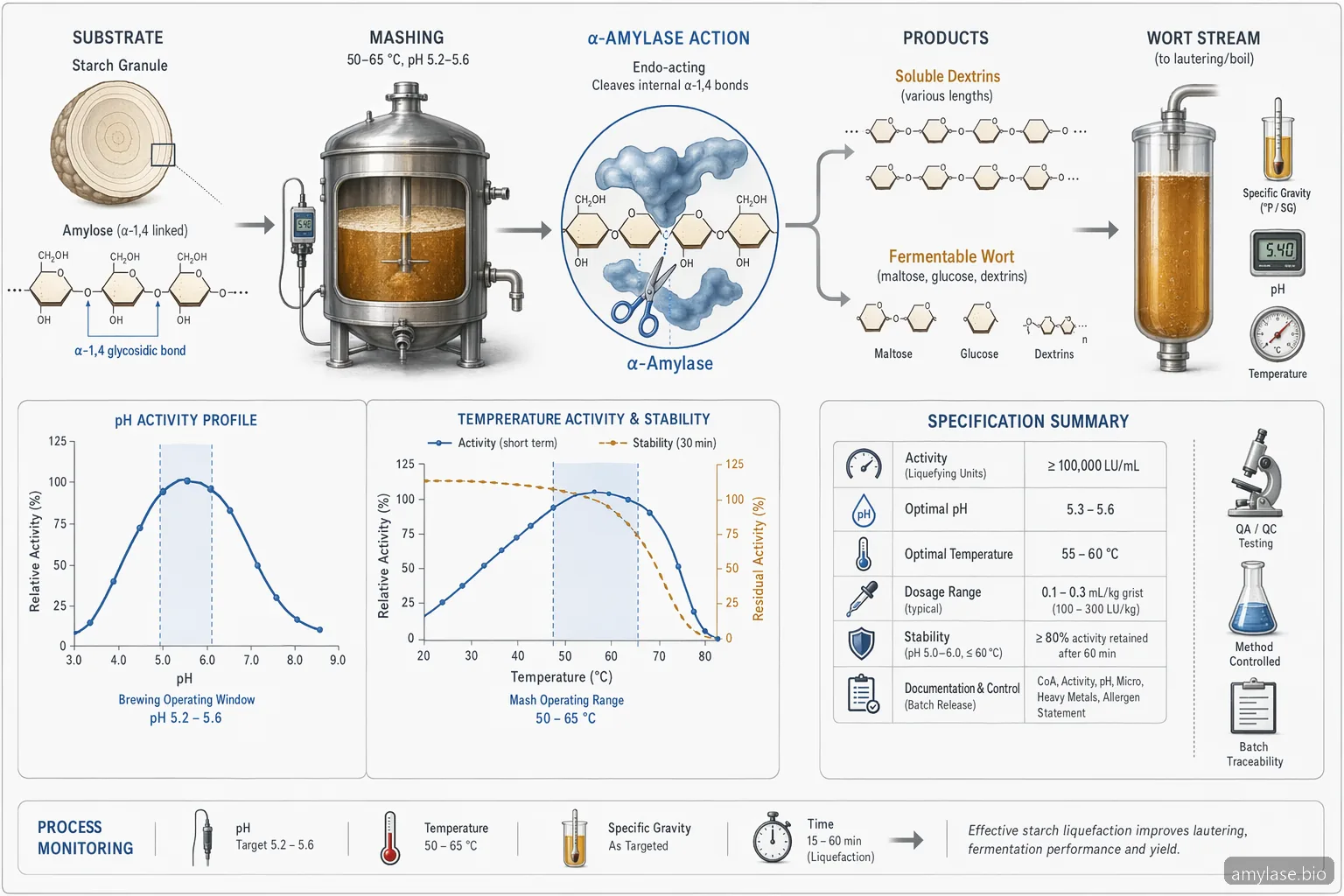
Most brewing applications evaluate alpha amylase enzyme performance around mash pH 5.2 to 6.2, although the exact useful range depends on the enzyme source and formulation. Temperature tolerance is equally important. Some products are intended for conventional mashing around 60 to 72 °C, while thermostable bacterial alpha amylase may be used in cereal cooking or liquefaction stages around 80 to 95 °C where starch gelatinization is more demanding. Initial dosage screening often begins in a broad band such as 0.05 to 0.30 kg per metric ton of grist, or an equivalent activity-based rate supplied on the TDS. Buyers should avoid copying a dosage from another plant without considering grist composition, residence time, calcium level, wort density, and downstream filtration behavior.
Record pH before and after enzyme addition during trials. • Track mash viscosity, iodine conversion, extract, and lautering rate. • Use activity-based dosing when comparing different suppliers.
Documentation: COA, TDS, SDS, and Specification Control
Before approving an amylase supplier, request a current Certificate of Analysis, Technical Data Sheet, and Safety Data Sheet for the exact product under evaluation. The COA should identify batch number, enzyme activity result, specification limits, manufacturing date or retest date, and relevant physical attributes such as appearance. The TDS should state the recommended pH range, temperature range, dosage guidance, storage conditions, shelf life, and application notes for brewing or starch processing. The SDS should support safe handling, storage, spill response, and worker training. For B2B procurement, also ask how activity is measured, because unit definitions may differ across suppliers. A high-quality supplier will explain methods clearly and notify customers about formulation, carrier, or specification changes that could affect brewhouse performance.
Confirm the activity unit and analytical method. • Check storage temperature and shelf-life assumptions. • Ask for change-control and batch traceability practices. • Keep trial samples linked to COA batch numbers.
Pilot Validation and Brewing QC Checks
Pilot validation protects buyers from approving an alpha amylase enzyme on paper but finding inconsistent results in production. Run bench mash tests first, then pilot or controlled brewhouse trials using representative malt, adjuncts, water chemistry, and rest schedules. Key QC checks include iodine test for residual starch, extract yield, apparent attenuation, wort viscosity, lautering time, turbidity, pH drift, and sensory neutrality after fermentation. If the process includes cereal cooking, measure viscosity reduction and pumpability before transfer to the main mash. Keep an untreated control and compare against the current enzyme amylase product if one is already in use. Trials should also document handling practicality: dosing accuracy, mixing behavior, dust or liquid handling risks, and compatibility with existing automation.
Use a control mash and at least two dosage levels. • Measure both conversion and downstream process impact. • Do not approve solely on iodine test results.
Cost-in-Use and Supplier Qualification
Industrial amylase purchasing should be evaluated on cost-in-use, not container price. A lower-priced product may require a higher dose, create slower conversion, or increase variability in filtration and extract. Compare total enzyme cost per hectoliter of wort, per metric ton of grist, or per unit of extract recovered. Include freight, shelf-life losses, minimum order quantity, lead time, and technical support availability. Supplier qualification should cover manufacturing consistency, documentation responsiveness, sample availability, packaging suitability, and ability to support pilot validation. Buyers should also ask whether the supplier can provide comparable lots for scale-up and whether they communicate significant process or formulation changes. A strong amylase enzyme supplier helps reduce operational risk as well as ingredient cost.
Calculate cost per production outcome, not cost per kilogram. • Review lead time and inventory risk before approval. • Assess technical support during trials and troubleshooting.
Technical Buying Checklist
Buyer Questions
Yes. Is amylase an enzyme? It is a class of enzymes that hydrolyze starch. In brewing, alpha amylase breaks internal starch bonds to reduce viscosity and form dextrins during mashing or adjunct liquefaction. Buyers should compare enzyme amylase products by activity method, pH and temperature stability, dosage requirement, documentation, and validated brewhouse results.
The substrate of the enzyme amylase is starch. In brewing, that starch may come from malted barley or adjuncts such as corn, rice, sorghum, wheat, or raw barley. Alpha amylase acts on gelatinized or accessible starch chains, producing shorter dextrins. Actual conversion depends on gelatinization, mash temperature, pH, residence time, grist composition, and enzyme dosage.
Compare suppliers using a structured trial. Request COA, TDS, SDS, activity method, storage guidance, and sample lots. Run bench or pilot mashes at your real pH, temperature, grist bill, and rest time. Measure extract, iodine conversion, viscosity, lautering, attenuation, and sensory impact. Then calculate cost-in-use and review supplier reliability, lead time, technical support, and change-control practices.
A practical screening band may start around 0.05 to 0.30 kg per metric ton of grist, but the correct dose must be activity-based and process-specific. Adjunct level, starch gelatinization, mash thickness, residence time, pH, temperature, and target wort profile all affect demand. Use supplier guidance as the starting point, then confirm through pilot validation and production QC.
In basic digestion references, the third enzyme category commonly paired with amylase and protease is lipase. That topic relates to human digestive biology and amylase digestive enzyme education, not B2B brewing procurement. For industrial brewing, focus instead on enzymes and amylase specifications such as substrate, temperature stability, pH range, activity method, dosage, COA, TDS, SDS, and brewhouse validation.
Amylase (General-Purpose)
ISO 9001 · Food Grade · HALAL · KOSHER
Frequently Asked Questions
Is amylase an enzyme used in brewing?
Yes. Is amylase an enzyme? It is a class of enzymes that hydrolyze starch. In brewing, alpha amylase breaks internal starch bonds to reduce viscosity and form dextrins during mashing or adjunct liquefaction. Buyers should compare enzyme amylase products by activity method, pH and temperature stability, dosage requirement, documentation, and validated brewhouse results.
What is the substrate of the enzyme amylase in brewing?
The substrate of the enzyme amylase is starch. In brewing, that starch may come from malted barley or adjuncts such as corn, rice, sorghum, wheat, or raw barley. Alpha amylase acts on gelatinized or accessible starch chains, producing shorter dextrins. Actual conversion depends on gelatinization, mash temperature, pH, residence time, grist composition, and enzyme dosage.
How should breweries compare alpha amylase enzyme suppliers?
Compare suppliers using a structured trial. Request COA, TDS, SDS, activity method, storage guidance, and sample lots. Run bench or pilot mashes at your real pH, temperature, grist bill, and rest time. Measure extract, iodine conversion, viscosity, lautering, attenuation, and sensory impact. Then calculate cost-in-use and review supplier reliability, lead time, technical support, and change-control practices.
What dosage of alpha amylase enzyme is typical for brewing trials?
A practical screening band may start around 0.05 to 0.30 kg per metric ton of grist, but the correct dose must be activity-based and process-specific. Adjunct level, starch gelatinization, mash thickness, residence time, pH, temperature, and target wort profile all affect demand. Use supplier guidance as the starting point, then confirm through pilot validation and production QC.
Related: Amylase Enzyme for Adjunct Brewing Mash Conversion
Turn This Guide Into a Supplier Brief Request brewing-grade amylase specifications, samples, and pilot-trial support for your mash process. See our application page for Amylase Enzyme for Adjunct Brewing Mash Conversion at /applications/amylase-brewing-mash-conversion/ for specs, MOQ, and a free 50 g sample.
Contact →