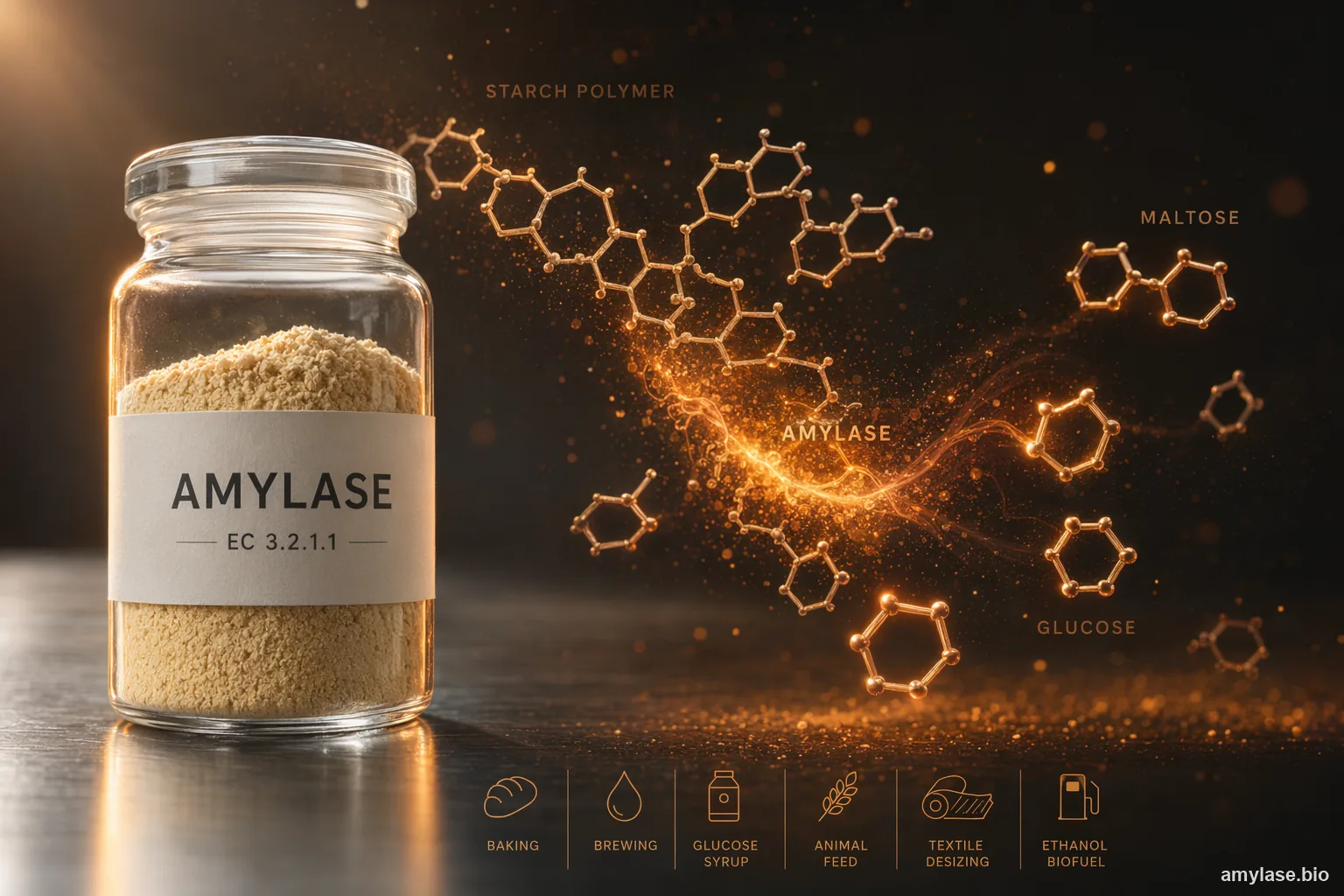
Amylase Enzyme Brewing: Practical Supplier Guide for Breweries
Source industrial amylase for brewing with practical pH, temperature, dosage, QC, COA, TDS, SDS, pilot validation, and cost-in-use guidance.
Choose the right amylase enzyme for brewing by matching enzyme activity, mash conditions, fermentability targets, documentation, and supplier support to your process.
What Amylase Does in Brewing
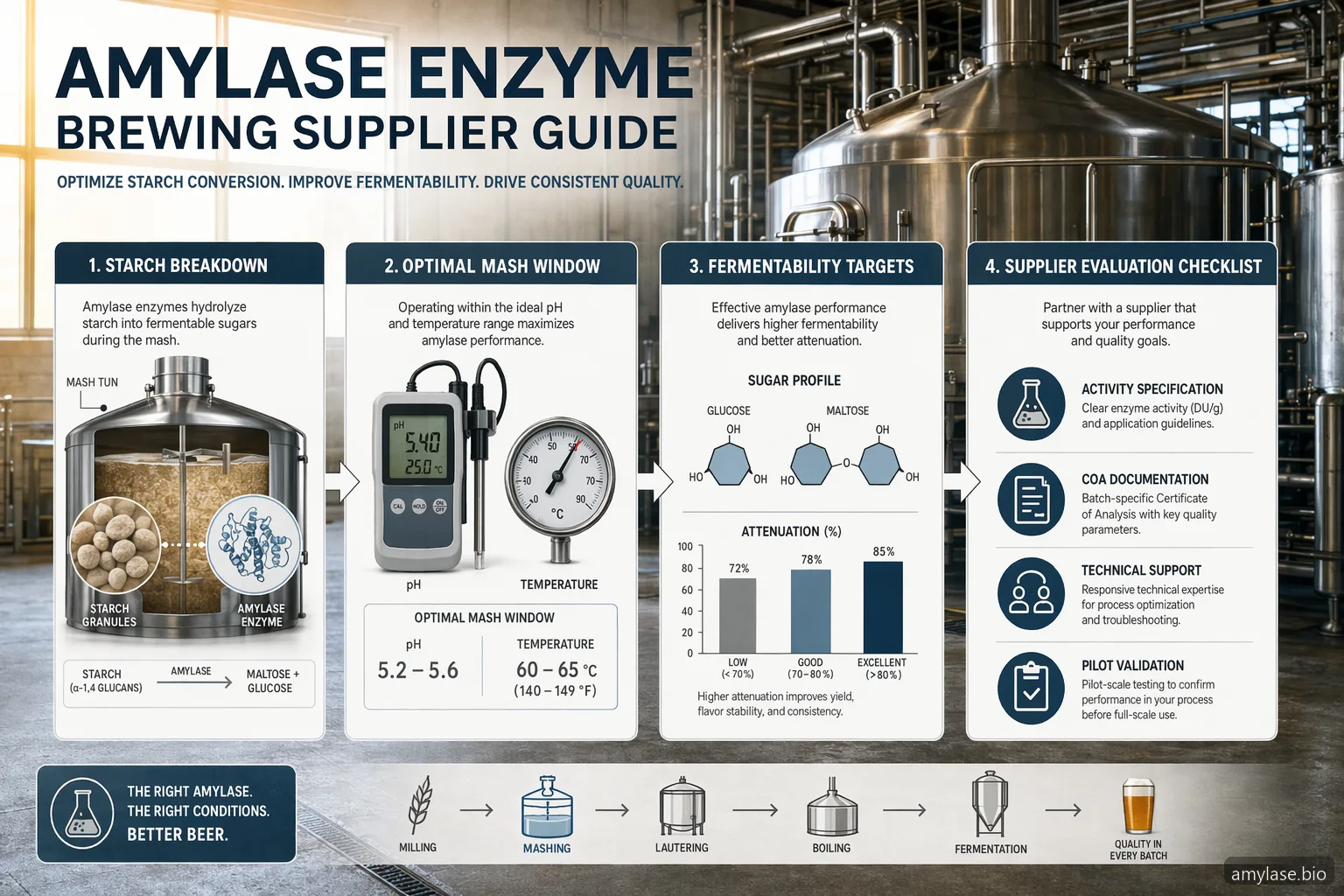
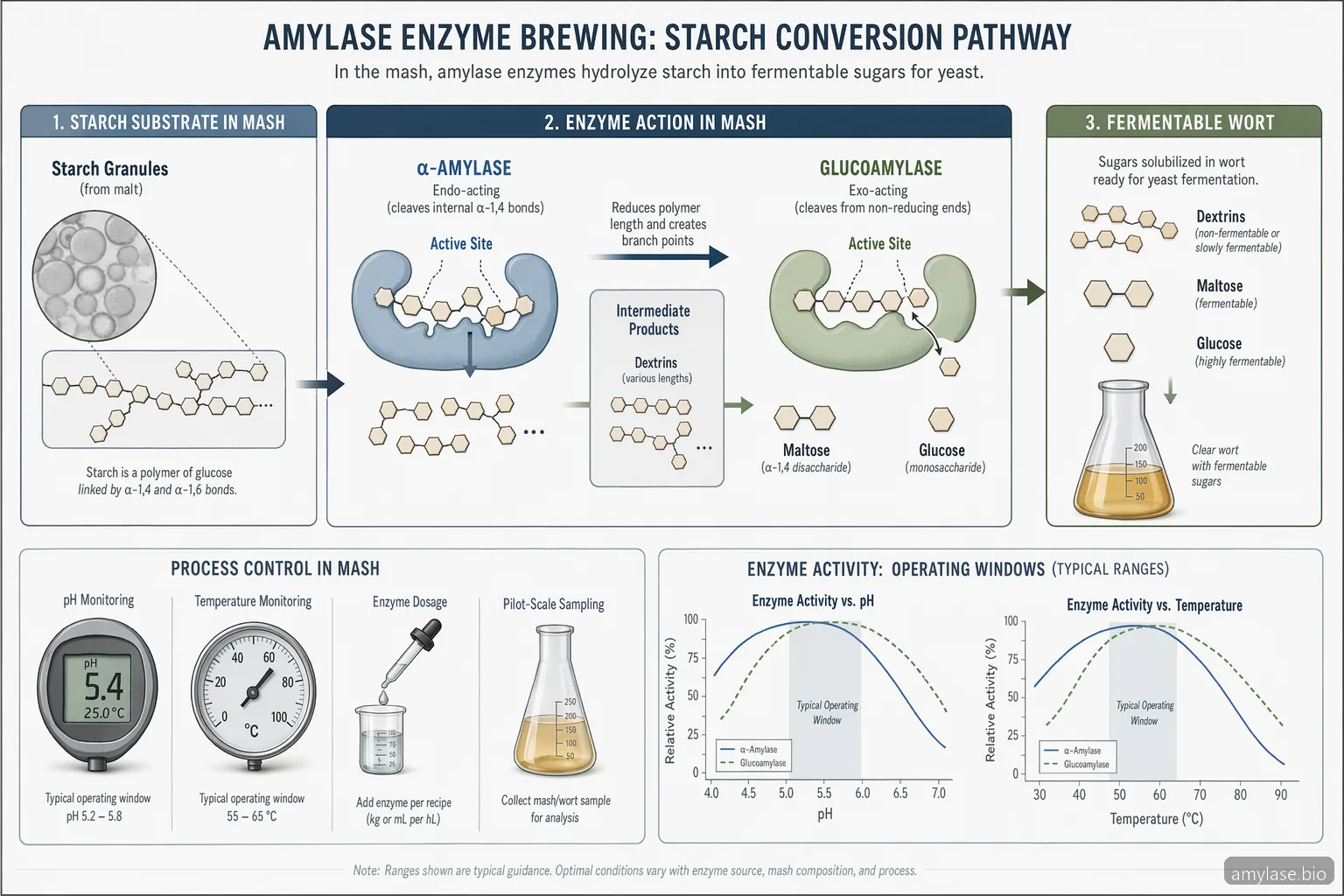
Amylase enzyme brewing applications focus on controlled starch hydrolysis. In malted barley, adjunct grains, or high-gravity brewing, starch granules must be gelatinized and broken into dextrins, maltose, glucose, and other soluble carbohydrates. Alpha amylase enzyme works mainly by cutting internal alpha-1,4 glycosidic bonds, rapidly reducing viscosity and creating shorter dextrins. Glucoamylase, often used alongside alpha amylase, releases glucose from dextrin ends and can increase apparent attenuation. For buyers asking, “is amylase an enzyme?” the answer is yes: enzyme amylase is a biocatalyst used to accelerate starch conversion under defined process conditions. The substrate of the enzyme amylase is starch and related dextrins, not protein or fat. In brewing, the goal is not maximum activity on paper, but predictable conversion, stable wort quality, manageable filtration, and repeatable fermentation performance.
Primary substrate: starch, gelatinized starch, and dextrins • Main brewing outcomes: extract yield, viscosity reduction, fermentability control • Common formats: liquid or granular industrial amylase • Typical use cases: adjunct brewing, high-gravity brewing, mash correction, attenuation control
Process Conditions: pH, Temperature, and Dosage
Selection should start with your real mash, cereal cooker, or fermentation-side conditions. Many brewing alpha amylase products are used around pH 5.2–6.0, with activity ranges commonly near 60–85°C, depending on source and thermostability. Fungal alpha amylase may suit lower temperature conditions around 50–60°C and pH 4.5–5.5. Glucoamylase is often used around pH 4.0–5.0 and 55–65°C, though some processes dose it into fermentation under lower-temperature conditions when validated. Indicative dosage bands may range from 0.05–0.50 kg per metric ton of grist or 20–200 ppm of liquid enzyme, but actual dosage must be calculated from declared activity units, substrate load, residence time, and target attenuation. Excess dosage can increase fermentability beyond specification, while under-dosing may leave starch haze, high viscosity, or lost extract.
Confirm enzyme activity units and assay method before comparing prices • Run stepwise dosage trials rather than approving a single lab result • Verify compatibility with calcium, sulfites, cleaning residues, and adjunct composition • Document hold time, temperature ramp, and enzyme inactivation conditions
How to Evaluate an Amylase Supplier
A qualified amylase supplier should provide more than a low unit price. Request a current certificate of analysis, technical data sheet, safety data sheet, recommended use range, storage stability, lot traceability, country of origin, and carrier or preservative information. The TDS should define enzyme type, activity, pH and temperature profile, density or bulk density, handling guidance, and shelf-life conditions. The COA should match the delivered batch and include activity or potency data, appearance, and relevant quality checks. The SDS should support safe handling by brewery, warehouse, and maintenance teams. For B2B procurement, supplier qualification should also review manufacturing consistency, change notification practices, technical support response, sample availability, and documentation for food-processing use where applicable. Avoid approving industrial amylase solely from catalog claims without process validation in your wort system.
Request COA, TDS, SDS, and batch traceability • Ask for activity retention data under recommended storage conditions • Check whether the supplier supports pilot trials and troubleshooting • Compare cost-in-use, not only price per kilogram
Pilot Validation for Brewery Approval
Pilot validation converts enzyme specifications into brewery-specific performance data. Start with a control batch using your standard malt bill, adjunct level, mash pH, liquor-to-grist ratio, and temperature program. Test at least three amylase dosage levels, such as low, target, and high, while holding other variables constant. Measure iodine conversion, wort viscosity, extract or Plato, fermentability, limit attenuation, filtration rate, turbidity, and fermentation kinetics. If the enzyme is used for high-gravity brewing, include dilution behavior and final alcohol target. If it is used to correct variable malt quality, test with both normal and challenging malt lots. Sensory screening is also important because changes in sugar profile can alter body, dryness, and balance. A robust approval package should include lab data, pilot brews, operational observations, and a cost-in-use model tied to finished beer specifications.
Use a no-enzyme control and at least three dosage levels • Track extract gain, attenuation, filtration, and fermentation speed • Confirm final beer profile remains within specification • Scale up only after repeatable pilot or production trial results
Cost-in-Use and Commercial Decision Factors
The lowest amylase enzyme price is not always the lowest brewing cost. Cost-in-use should include enzyme dosage, extract recovery, fermenter capacity impact, filtration efficiency, batch cycle time, rework reduction, shipping, storage losses, and documentation workload. A higher-activity product may reduce handling volume but still require validation of dispersion and dosing accuracy. A lower-cost product may be uneconomical if it causes variable attenuation, starch carryover, or slow lautering. For industrial amylase procurement, compare suppliers using equivalent activity delivered to the mash or fermenter, not only package weight. Build a trial worksheet that records enzyme lot, dose, mash pH, temperature, contact time, grist composition, wort gravity, attenuation, and finished beer results. This makes purchasing, brewing, QA, and finance evaluate the same operational outcome.
Calculate cost per hectoliter or per metric ton of grist • Include yield improvement and avoided rework in the model • Account for storage temperature and shelf-life losses • Evaluate supply reliability and change control
Brewing Amylase Versus Digestive Enzyme Context
Searches around enzymes and amylase often mix industrial brewing with human digestion. In biology, the small intestine produces amylase, protease, and lipase activity through digestive secretions and pancreatic input; amylase digestive enzyme discussions usually focus on nutrition, not brewing procurement. For a brewery, the relevant question is different: which industrial amylase product performs under your mash or fermentation conditions and meets food-processing documentation requirements? Brewing teams should avoid using supplement-grade materials or medical claims as a sourcing basis. Industrial products are selected by declared activity, process stability, purity profile, carrier system, and technical support. When asking what is the substrate of the enzyme amylase, the answer remains starch, but brewery performance depends on gelatinization, grist composition, pH, temperature, and residence time. Treat amylase as a process aid that must be validated against beer specifications.
Industrial brewing use is separate from supplement or medical use • Do not substitute consumer digestive products for brewery processing aids • Base approval on brewing trials, documentation, and supplier qualification • Match enzyme type to starch conversion and attenuation goals
Technical Buying Checklist
Buyer Questions
The main substrate of the enzyme amylase is starch, including gelatinized starch and soluble dextrins from malt or adjunct grains. Alpha amylase cuts internal starch bonds to reduce viscosity and form dextrins, while glucoamylase can release glucose from dextrin ends. In brewing, substrate accessibility depends on milling, gelatinization, mash temperature, pH, and residence time.
Yes. Amylase is an enzyme used in commercial brewing to support starch conversion, extract yield, viscosity control, adjunct processing, and fermentability adjustment. Breweries may rely on malt-native enzymes, added industrial amylase, or both. Added enzyme amylase is selected by activity, operating window, documentation, and validated performance in the specific mash or fermentation process.
Compare suppliers using cost-in-use and technical fit, not price per drum alone. Request COA, TDS, SDS, activity units, assay method, storage stability, batch traceability, and change notification practices. Then run pilot trials at controlled dosage levels and measure extract, viscosity, filtration, attenuation, fermentation performance, and sensory results before approving a long-term amylase supplier.
A common starting trial band for alpha amylase enzyme may be about 0.05–0.50 kg per metric ton of grist or 20–200 ppm for some liquid products, but this varies widely by activity, substrate load, temperature, pH, and contact time. Always use the supplier’s TDS and validate with pilot brews before setting production dosage.
An amylase digestive enzyme is discussed in human or animal digestion, while brewing amylase is an industrial processing aid selected for starch conversion under brewery conditions. The small intestine produces amylase, protease, and lipase-related digestive activity, but that biology is not a procurement specification. Breweries should source industrial products with COA, TDS, SDS, traceability, and process validation.
Amylase (General-Purpose)
ISO 9001 · Food Grade · HALAL · KOSHER
Frequently Asked Questions
What is the substrate of the enzyme amylase in brewing?
The main substrate of the enzyme amylase is starch, including gelatinized starch and soluble dextrins from malt or adjunct grains. Alpha amylase cuts internal starch bonds to reduce viscosity and form dextrins, while glucoamylase can release glucose from dextrin ends. In brewing, substrate accessibility depends on milling, gelatinization, mash temperature, pH, and residence time.
Is amylase an enzyme used by commercial breweries?
Yes. Amylase is an enzyme used in commercial brewing to support starch conversion, extract yield, viscosity control, adjunct processing, and fermentability adjustment. Breweries may rely on malt-native enzymes, added industrial amylase, or both. Added enzyme amylase is selected by activity, operating window, documentation, and validated performance in the specific mash or fermentation process.
How should a brewery compare amylase suppliers?
Compare suppliers using cost-in-use and technical fit, not price per drum alone. Request COA, TDS, SDS, activity units, assay method, storage stability, batch traceability, and change notification practices. Then run pilot trials at controlled dosage levels and measure extract, viscosity, filtration, attenuation, fermentation performance, and sensory results before approving a long-term amylase supplier.
What dosage of alpha amylase enzyme is typical for brewing?
A common starting trial band for alpha amylase enzyme may be about 0.05–0.50 kg per metric ton of grist or 20–200 ppm for some liquid products, but this varies widely by activity, substrate load, temperature, pH, and contact time. Always use the supplier’s TDS and validate with pilot brews before setting production dosage.
Related: Amylase Enzyme for Adjunct Brewing Mash Conversion
Turn This Guide Into a Supplier Brief Request brewing amylase samples, documentation, and pilot-trial support for your mash or adjunct process. See our application page for Amylase Enzyme for Adjunct Brewing Mash Conversion at /applications/amylase-brewing-mash-conversion/ for specs, MOQ, and a free 50 g sample.
Contact →