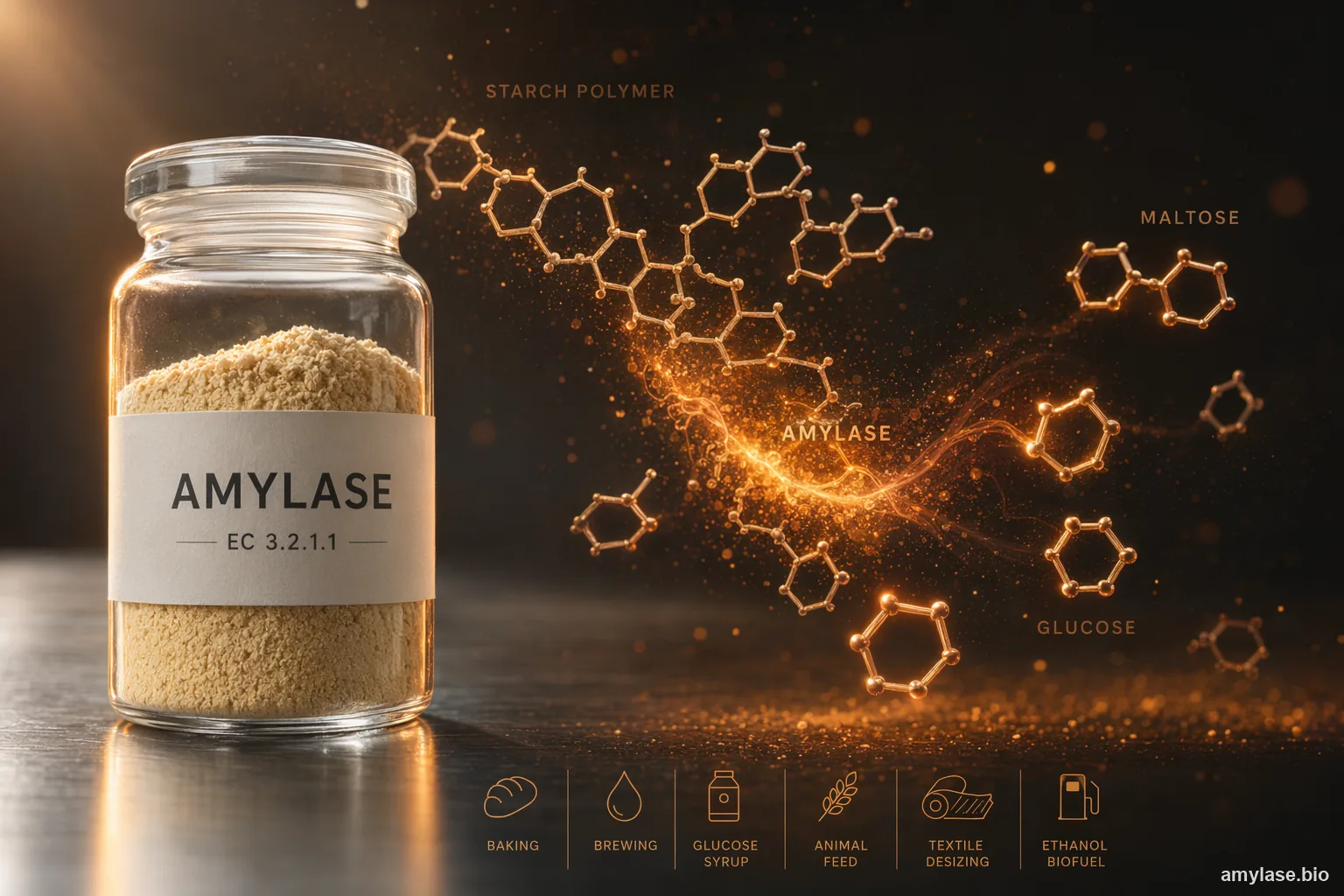
Amylase Brewing Enzyme for Brewing Formulations
Formulate with amylase brewing enzyme: pH, temperature, dosage, QC checks, COA/TDS/SDS review, pilot trials, and supplier qualification.
Choose and apply industrial amylase with practical brewing conditions, validation checks, and procurement criteria for consistent extract, fermentability, and cost-in-use.
Why amylase matters in brewing
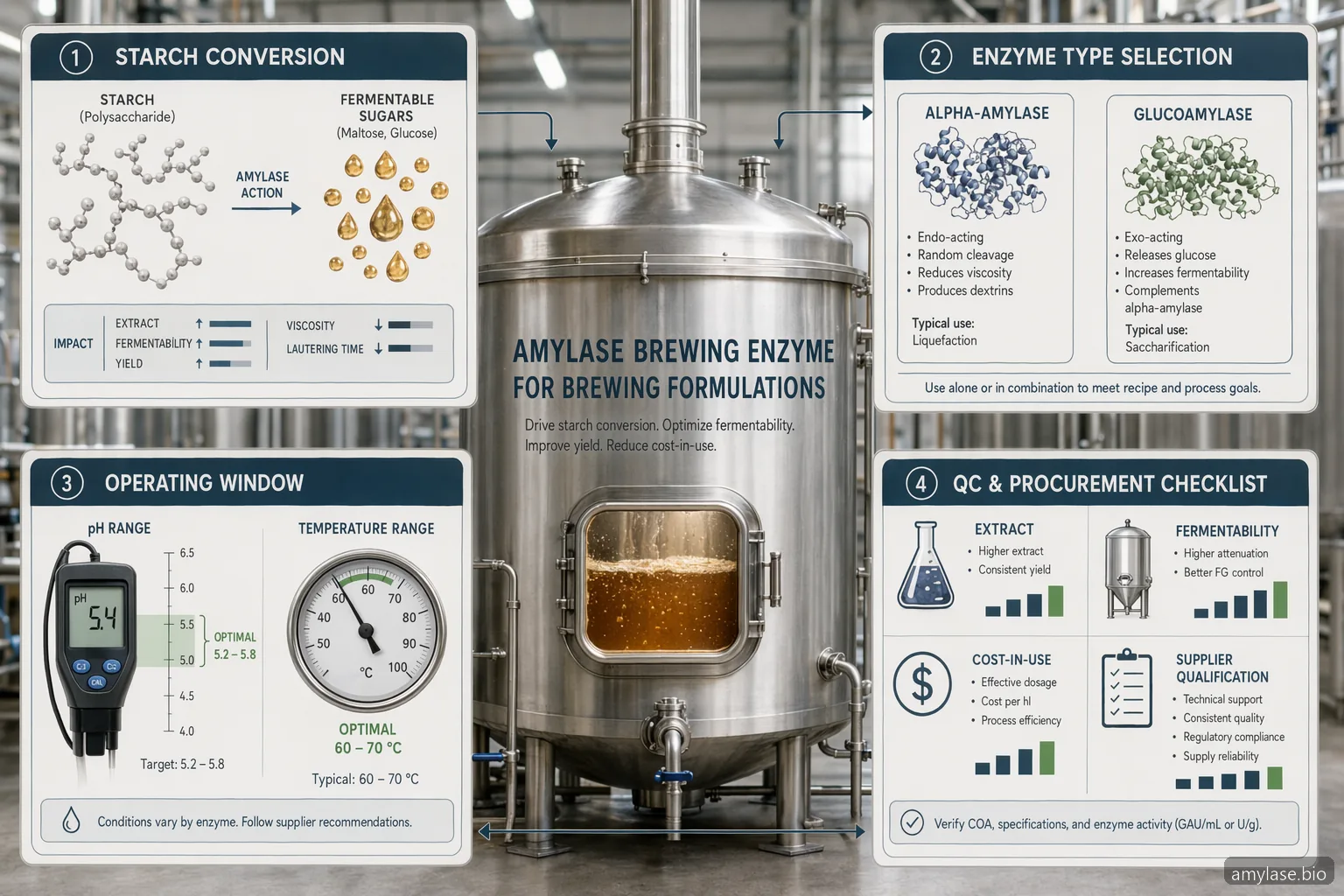
An amylase brewing enzyme is used to hydrolyze starch from malt, corn, rice, sorghum, barley, wheat, and other adjuncts into smaller dextrins and fermentable sugars. For breweries using high adjunct ratios, variable malt quality, or accelerated mash schedules, supplemental amylase enzyme can help stabilize extract recovery and wort fermentability. The substrate of the enzyme amylase is primarily starch, including amylose and amylopectin, which are broken at specific glycosidic bonds depending on the enzyme type. Alpha amylase enzyme rapidly reduces starch viscosity by cleaving internal bonds, while saccharifying enzymes can increase glucose or maltose formation when required. In formulation work, the target is not simply maximum conversion; it is a predictable sugar profile, manageable wort viscosity, and consistent downstream fermentation. Enzymes and amylase use should therefore be aligned with the brewhouse, yeast strain, alcohol target, and finished beer style.
Primary function: starch and dextrin hydrolysis • Typical objectives: extract yield, viscosity control, fermentability • Key formulation variables: adjunct type, mash pH, time, temperature
Selecting the right amylase enzyme type
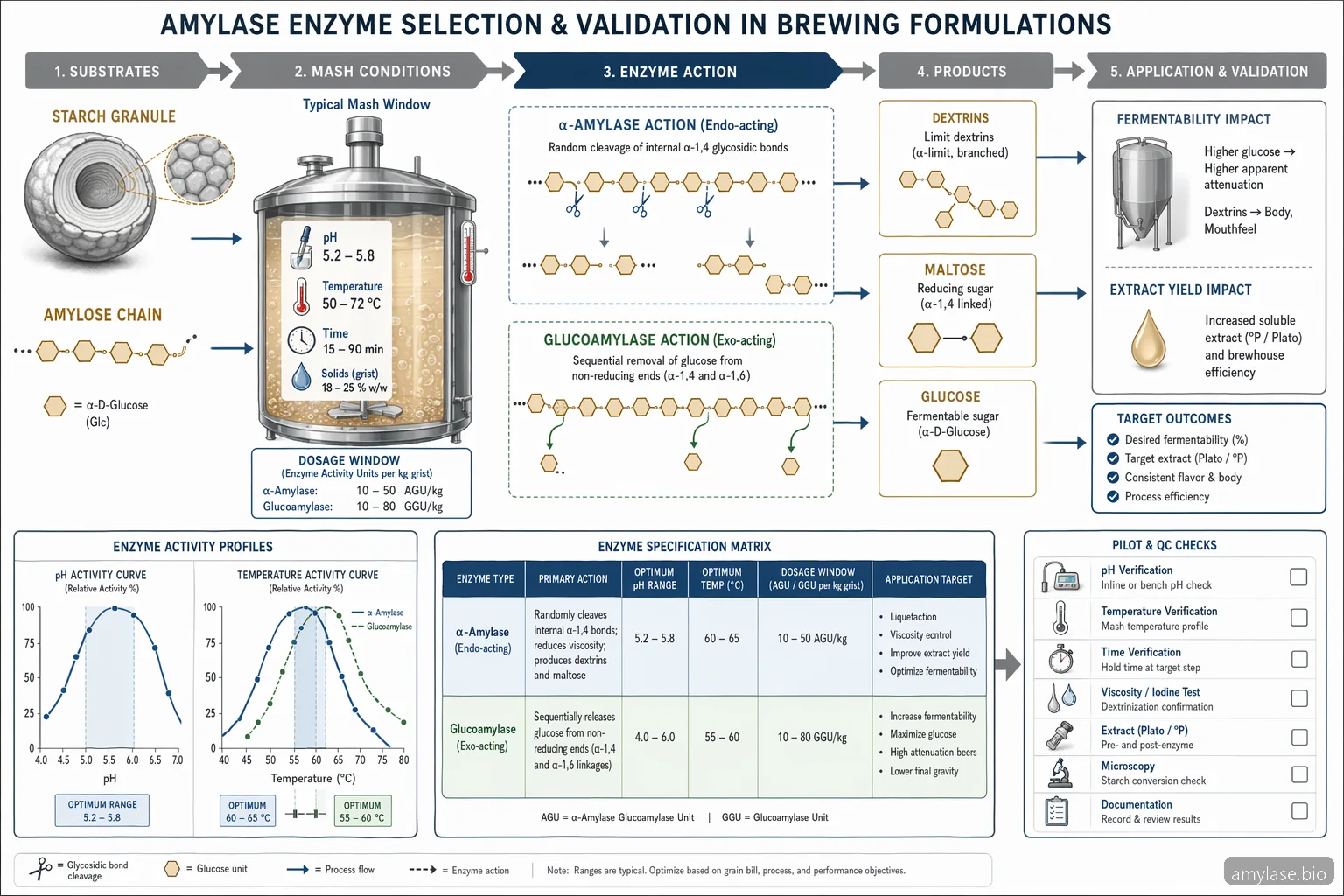
The best enzyme amylase choice depends on the mash temperature profile and desired carbohydrate spectrum. Thermostable bacterial alpha amylase is commonly evaluated for liquefaction or high-temperature adjunct cooking, often around pH 5.2 to 6.2 and 80 to 95°C, depending on the product TDS. Fungal alpha amylase is typically used at lower temperatures, often pH 4.5 to 5.5 and 50 to 65°C, where maltose and dextrin modification are desired. Glucoamylase, although not always labeled simply as amylase, is often paired with amylase for high attenuation or low-carbohydrate beer programs, frequently near pH 4.0 to 5.0 and 55 to 65°C. Dosage should be based on declared activity, grist composition, residence time, and wort targets rather than volume alone. Always confirm suitability with the technical data sheet and small-scale trials before plant use.
Thermostable alpha amylase: liquefaction and viscosity reduction • Fungal alpha amylase: lower-temperature saccharification support • Glucoamylase pairing: increased glucose and attenuation when specified
Recommended formulation approach
For a new amylase brewing enzyme program, start with a bench or pilot dosage range before moving to production. A practical screening band is often 0.01 to 0.10% w/w on grist or an equivalent activity-based dose supplied by the manufacturer; highly concentrated products may require much lower inclusion rates. Add the enzyme where the substrate is gelatinized and accessible, such as an adjunct cooker, cereal mash, or main mash hold. Maintain the pH and temperature window listed on the TDS, because off-range conditions reduce activity and may distort the sugar profile. Where the process includes wort boiling, most amylase activity is inactivated by heat; if enzyme is added later, define a validated inactivation or control strategy. Record mash time, pH, temperature, adjunct percentage, enzyme lot, dose, and conversion results for every trial.
Screen multiple dose points, not a single addition rate • Dose by activity where possible for lot-to-lot consistency • Confirm enzyme inactivation strategy during process design
QC checks and pilot validation
Pilot validation should connect enzyme performance with measurable brewing outcomes. Common checks include iodine test for residual starch, wort viscosity, extract or gravity, fermentable sugar profile by HPLC or equivalent method, apparent attenuation, real degree of fermentation, filtration behavior, and sensory review. For adjunct-heavy formulas, compare enzyme-treated and untreated controls under the same mash schedule. Cost-in-use should include enzyme price, dose, extract gain, cycle time, filtration improvement, rework reduction, and any change in attenuation or alcohol yield. QC should also verify that the product received matches the purchasing specification: activity, appearance, pH range, storage condition, shelf life, and lot number. Request a COA for each lot and review it against the TDS before release to production. The SDS should be available to support safe handling, storage, and employee training.
Run treated and untreated controls • Measure conversion, fermentability, viscosity, and filtration • Track lot-specific COA results against internal specifications • Calculate cost-in-use, not only price per kilogram
Supplier qualification for industrial breweries
A qualified amylase supplier should support formulation work with transparent documentation, consistent activity, and responsive technical service. Before approval, request the current TDS, SDS, sample COA, allergen or composition statements where relevant, recommended storage conditions, packaging options, and activity assay method. Ask how activity is standardized, how batch traceability is maintained, and what lead times apply for routine and peak demand. Avoid relying on broad claims such as “high efficiency” without pilot data in your mash system. For multi-site breweries or contract manufacturing, align specifications across plants and define acceptable activity tolerance, packaging, labeling, and documentation requirements in the purchase specification. Supplier qualification is especially important when enzyme performance affects alcohol yield, flavor consistency, filtration capacity, and regulatory labeling decisions in the markets where the beer is sold.
Review COA, TDS, SDS, and activity assay method • Confirm storage, shelf life, packaging, and traceability • Approve suppliers based on plant-relevant pilot data
Technical Buying Checklist
Buyer Questions
Yes. Is amylase an enzyme is a common question, and in brewing the answer is directly relevant: amylase is an enzyme class that hydrolyzes starch into dextrins and fermentable sugars. Industrial brewers use amylase to support extract recovery, wort viscosity control, and attenuation targets, especially when adjunct levels are high or malt enzyme strength varies.
The main substrate of the enzyme amylase is starch, including amylose and amylopectin from malted grain or adjunct cereals. During brewing, the enzyme attacks glycosidic bonds in gelatinized starch and produces shorter dextrins, maltose, glucose, or related carbohydrates depending on the amylase type and process conditions. Substrate accessibility improves after milling, hydration, and gelatinization.
A practical first screen is often 0.01 to 0.10% w/w on grist, or the supplier’s equivalent activity-based recommendation. The correct dose depends on enzyme concentration, adjunct type, mash pH, temperature, residence time, and target fermentability. Run bench and pilot trials with at least three dose points, then select the lowest dose that meets conversion and quality targets.
Evaluate an amylase supplier using documentation and performance data. Request the COA, TDS, SDS, activity assay method, shelf life, storage conditions, packaging details, and lot traceability process. Then validate samples in your own mash system. Supplier approval should consider cost-in-use, technical support, batch consistency, lead time, and the ability to meet your purchasing specification.
In digestive biology, this question is usually answered with lipase, alongside enzymes such as amylase and protease. However, that amylase digestive enzyme context is different from industrial brewing. This page addresses B2B brewing formulations, where enzyme selection is based on starch conversion, process pH, temperature stability, wort targets, documentation, and plant validation.
Amylase (General-Purpose)
ISO 9001 · Food Grade · HALAL · KOSHER
Frequently Asked Questions
Is amylase an enzyme used in brewing?
Yes. Is amylase an enzyme is a common question, and in brewing the answer is directly relevant: amylase is an enzyme class that hydrolyzes starch into dextrins and fermentable sugars. Industrial brewers use amylase to support extract recovery, wort viscosity control, and attenuation targets, especially when adjunct levels are high or malt enzyme strength varies.
What is the substrate of the enzyme amylase?
The main substrate of the enzyme amylase is starch, including amylose and amylopectin from malted grain or adjunct cereals. During brewing, the enzyme attacks glycosidic bonds in gelatinized starch and produces shorter dextrins, maltose, glucose, or related carbohydrates depending on the amylase type and process conditions. Substrate accessibility improves after milling, hydration, and gelatinization.
What dosage should I use for an amylase brewing enzyme?
A practical first screen is often 0.01 to 0.10% w/w on grist, or the supplier’s equivalent activity-based recommendation. The correct dose depends on enzyme concentration, adjunct type, mash pH, temperature, residence time, and target fermentability. Run bench and pilot trials with at least three dose points, then select the lowest dose that meets conversion and quality targets.
How should a brewery evaluate an amylase supplier?
Evaluate an amylase supplier using documentation and performance data. Request the COA, TDS, SDS, activity assay method, shelf life, storage conditions, packaging details, and lot traceability process. Then validate samples in your own mash system. Supplier approval should consider cost-in-use, technical support, batch consistency, lead time, and the ability to meet your purchasing specification.
Related: Amylase Enzyme for Adjunct Brewing Mash Conversion
Turn This Guide Into a Supplier Brief Request an amylase brewing enzyme sample, TDS, SDS, and pilot-dose recommendation for your mash profile. See our application page for Amylase Enzyme for Adjunct Brewing Mash Conversion at /applications/amylase-brewing-mash-conversion/ for specs, MOQ, and a free 50 g sample.
Contact →