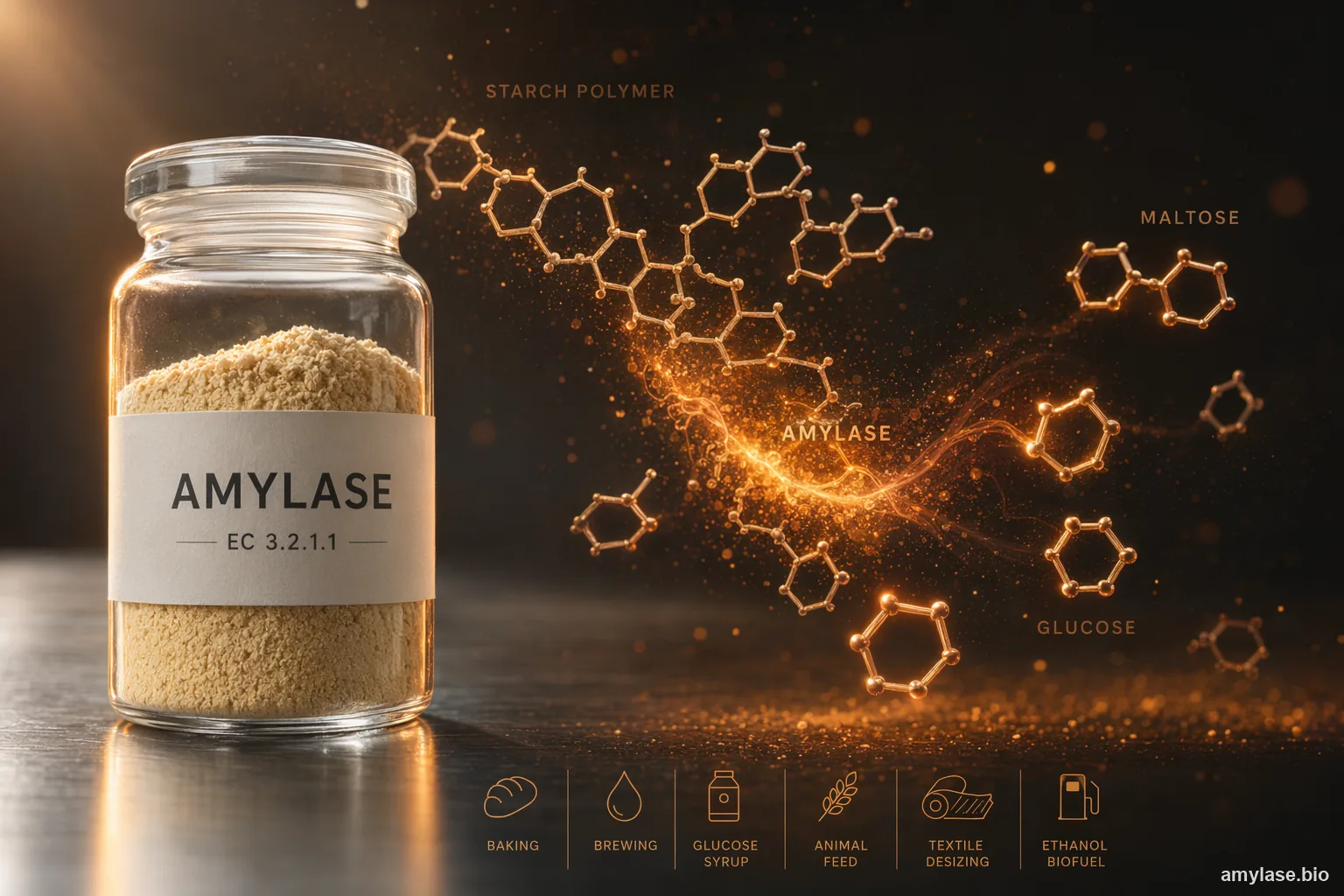
Amylase Enzyme Dosage, pH, and Temperature in Baking
Troubleshoot baking amylase dosage, pH, temperature, QC, COA/TDS/SDS review, pilot validation, and supplier qualification.
A practical B2B guide for bakeries and flour improvers troubleshooting amylase performance, loaf volume, fermentation, crust color, and crumb softness.
Why amylase matters in industrial baking
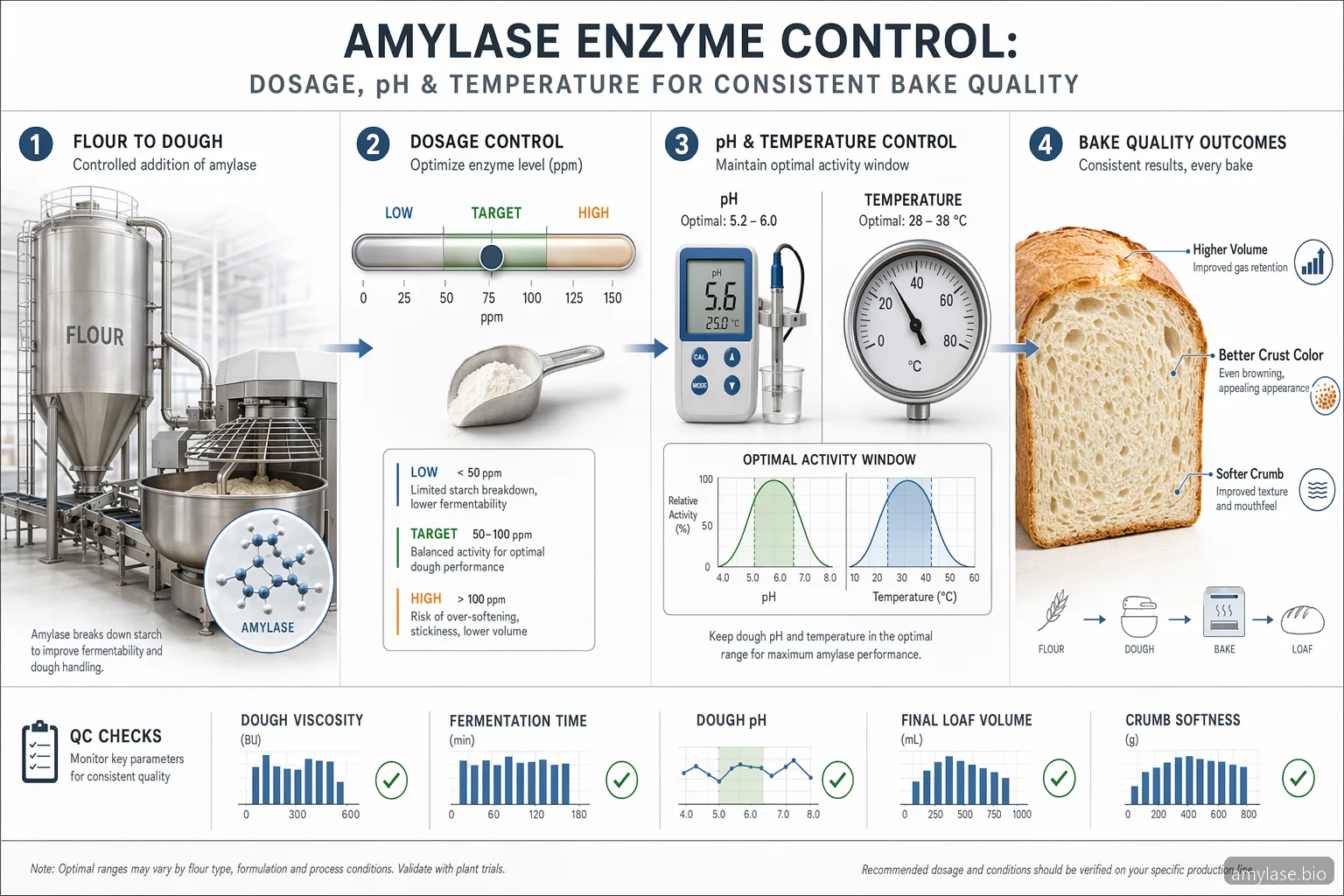
Amylase is an enzyme that breaks down damaged starch into smaller dextrins and fermentable sugars. In baking, this helps yeast activity, improves crust color, supports oven spring, and can contribute to softer crumb depending on the enzyme amylase type used. The main substrate of the enzyme amylase is starch, especially damaged starch exposed during milling. For B2B buyers, the key question is not simply “is amylase an enzyme,” but whether the selected alpha amylase enzyme matches flour variability, proof time, pH, temperature, and product format. Under-dosing can cause slow fermentation, pale crust, and low volume. Over-dosing can lead to sticky dough, gummy crumb, collapsing structure, or excessive browning. A controlled specification, pilot validation, and lot-to-lot QC program reduce these risks while improving cost-in-use.
Primary substrate: starch and damaged starch fractions • Common outcomes: fermentation support, color, volume, softness • Main risk: overdosing, especially with thermostable preparations
Starting dosage bands and adjustment logic
Because industrial amylase products differ widely in activity, dosage should be based on declared units in the TDS rather than product weight alone. As a practical screening range, many concentrated fungal alpha-amylase products are evaluated at about 10–80 g per metric ton of flour, while maltogenic or anti-staling amylases may require different dose ranges specified by the supplier. Start at the low end when flour Falling Number is already low, damaged starch is high, or proofing is long. Increase gradually when flour is strong but enzyme activity is insufficient, crust is pale, or fermentation is slow. Run side-by-side bakes at minimum, midpoint, and maximum proposed dose, then compare loaf volume, crumb resilience, slicing behavior, color, and sensory shelf-life. Calculate cost-in-use per metric ton of finished bread, not only price per kilogram of enzyme.
Use the supplier activity unit and TDS dosage guidance • Validate against flour Falling Number and damaged starch • Avoid one fixed dose for all flour lots • Assess cost-in-use after bake performance, not before
pH and temperature windows to control activity
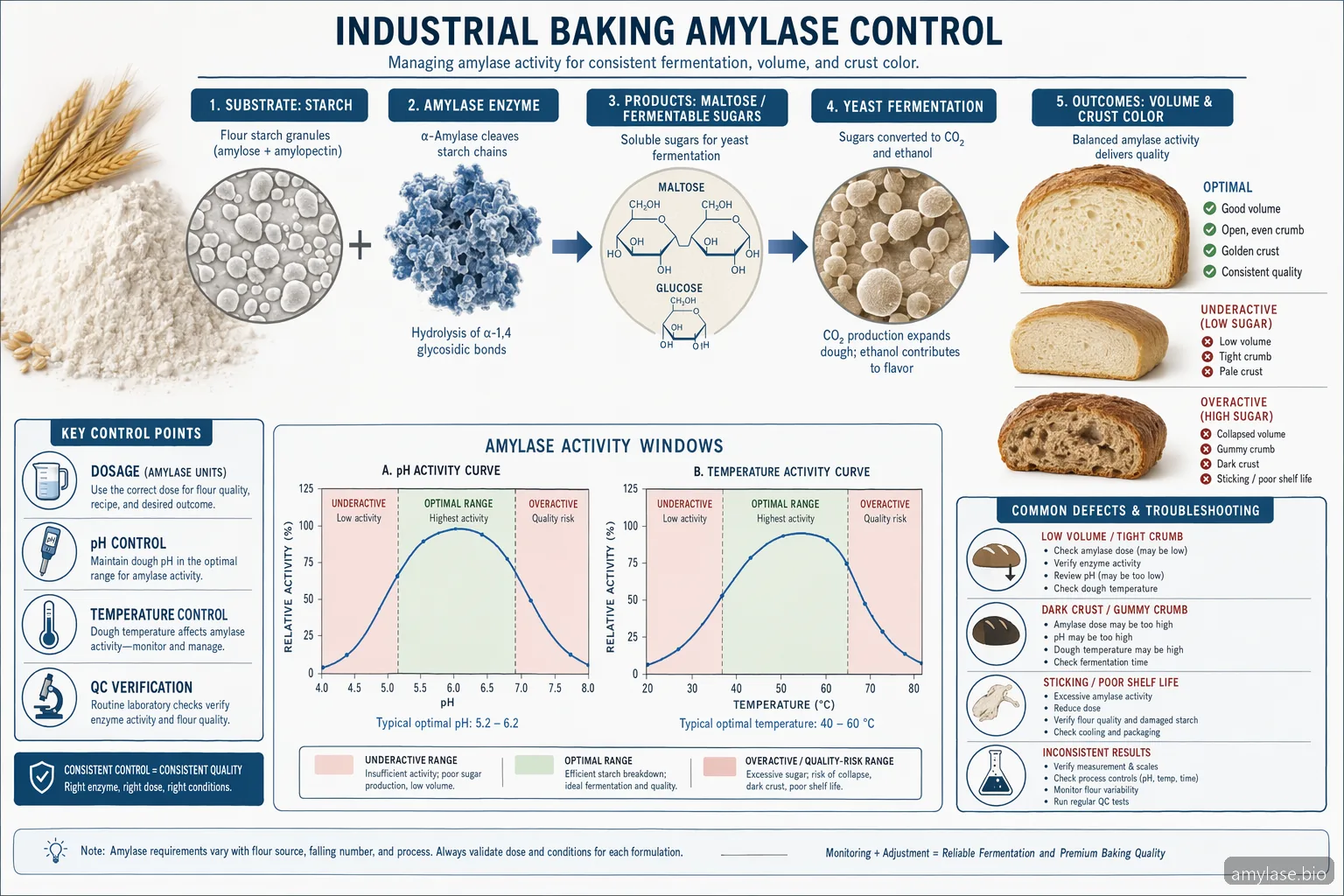
Most baking dough systems operate around pH 5.0–6.0, which is compatible with many fungal baking amylases. Mixing temperatures commonly fall near 24–30°C, while proofing is often around 30–40°C. These conditions allow moderate starch hydrolysis before baking. Enzyme activity accelerates as temperature rises until the enzyme begins to denature; many fungal alpha-amylases lose activity during baking as crumb temperatures climb, while some bacterial or thermostable amylases can remain active longer. That difference is critical: a thermostable enzyme can be useful in selected processes, but excessive residual activity may create gummy crumb or weak slicing performance. Confirm pH and temperature optima on the TDS, then verify in the actual formula because salt, sugar, fat, acids, emulsifiers, and water absorption can shift practical performance.
Typical dough pH: 5.0–6.0 • Typical mix temperature: 24–30°C • Typical proof temperature: 30–40°C • Confirm bake inactivation behavior in the TDS
Troubleshooting common baking defects
When an amylase digestive enzyme is discussed online, it often refers to nutrition, but industrial baking troubleshooting is about process performance. Pale crust, tight crumb, and slow fermentation may indicate insufficient fermentable sugars, low damaged starch availability, or under-dosed amylase. Gummy crumb, sticky slicer blades, weak sidewalls, excessive crust color, or collapsed loaves may indicate over-dosing, highly sprouted flour, long fermentation, or an overly thermostable enzyme. Always compare the enzyme trial with a no-enzyme control and a commercial benchmark. If results change by flour delivery, test Falling Number, moisture, ash, protein, damaged starch, and water absorption. If results change by season, check proof temperature, dough pH, yeast activity, and holding time. Enzymes and amylase performance must be evaluated as part of the full formulation, not as an isolated additive.
Under-dose signs: pale crust, slow proof, low volume • Over-dose signs: gumminess, stickiness, weak crumb • Check flour variation before changing the enzyme specification • Keep a no-enzyme control in pilot trials
QC checks, documents, and supplier qualification
A qualified amylase supplier should provide a current COA for each lot, a technical data sheet with declared activity and dosage guidance, and an SDS for safe handling. For food applications, buyers should also request ingredient status, carrier information, allergen information where applicable, recommended storage, shelf life, country of origin if required by procurement, and traceability data. Pilot validation should include bench dough tests, plant trials, packaging and slicing evaluation, and shelf-life checks under the bakery’s normal distribution conditions. Supplier qualification should review manufacturing consistency, change-control communication, documentation responsiveness, sample availability, and ability to support root-cause analysis. Avoid approving an enzyme amylase solely on unit price; a lower-priced product may cost more if dosage, variability, waste, or customer complaints increase.
Required documents: COA, TDS, SDS • Validate by pilot and plant trial before approval • Review lot traceability and change-control process • Compare suppliers by cost-in-use and process stability
Technical Buying Checklist
Buyer Questions
The main substrate is starch, particularly damaged starch granules created during flour milling. Amylase hydrolyzes starch into dextrins and smaller sugars that can support yeast fermentation and browning reactions. The available substrate depends on flour type, milling damage, hydration, mixing, and fermentation time. That is why Falling Number and damaged starch testing are useful before changing dosage.
Yes, amylase is an enzyme. In bread and other baked goods, fungal alpha amylase enzyme is widely used to support fermentation, crust color, and loaf volume. Maltogenic amylase may be selected when crumb softness and shelf-life texture are priorities. Bacterial or thermostable amylases can be useful in certain applications but require tighter controls to avoid gummy crumb.
Typical overdose indicators include sticky dough, gummy crumb, poor slicing, dark crust, weak sidewalls, or loaves that collapse after oven spring. Confirm by running a no-enzyme control and reduced-dose trials using the same flour lot. Also check Falling Number, proof time, and bake profile, because sprouted flour or long fermentation can look like enzyme overuse.
For many bread systems, practical dough pH is around 5.0–6.0, mixing temperature is about 24–30°C, and proofing is about 30–40°C. These are process ranges, not universal enzyme specifications. Always compare them with the supplier TDS because enzyme source, formulation, and thermostability determine activity and inactivation during baking.
In human digestion, lipase is commonly discussed with amylase and protease, but that topic is separate from industrial baking. This page addresses amylase as a processing aid or ingredient system for bakeries and flour improvers, not medical or supplement use. B2B buyers should focus on food-grade documentation, process performance, dosage validation, and supplier qualification.
Request a COA for the lot, TDS with activity units and dosage guidance, SDS, storage conditions, shelf life, carrier information, allergen information where relevant, and traceability details. Then run pilot and plant trials using your flour, formula, and bake schedule. Final approval should consider performance consistency, technical support, documentation quality, and cost-in-use.
Amylase (General-Purpose)
ISO 9001 · Food Grade · HALAL · KOSHER
Frequently Asked Questions
What is the substrate of the enzyme amylase in baking?
The main substrate is starch, particularly damaged starch granules created during flour milling. Amylase hydrolyzes starch into dextrins and smaller sugars that can support yeast fermentation and browning reactions. The available substrate depends on flour type, milling damage, hydration, mixing, and fermentation time. That is why Falling Number and damaged starch testing are useful before changing dosage.
Is amylase an enzyme, and which type is used in bread?
Yes, amylase is an enzyme. In bread and other baked goods, fungal alpha amylase enzyme is widely used to support fermentation, crust color, and loaf volume. Maltogenic amylase may be selected when crumb softness and shelf-life texture are priorities. Bacterial or thermostable amylases can be useful in certain applications but require tighter controls to avoid gummy crumb.
How do we know if our bakery is overdosing amylase?
Typical overdose indicators include sticky dough, gummy crumb, poor slicing, dark crust, weak sidewalls, or loaves that collapse after oven spring. Confirm by running a no-enzyme control and reduced-dose trials using the same flour lot. Also check Falling Number, proof time, and bake profile, because sprouted flour or long fermentation can look like enzyme overuse.
What pH and temperature should we specify for amylase trials?
For many bread systems, practical dough pH is around 5.0–6.0, mixing temperature is about 24–30°C, and proofing is about 30–40°C. These are process ranges, not universal enzyme specifications. Always compare them with the supplier TDS because enzyme source, formulation, and thermostability determine activity and inactivation during baking.
What should we request from an amylase supplier before approval?
Request a COA for the lot, TDS with activity units and dosage guidance, SDS, storage conditions, shelf life, carrier information, allergen information where relevant, and traceability details. Then run pilot and plant trials using your flour, formula, and bake schedule. Final approval should consider performance consistency, technical support, documentation quality, and cost-in-use.
Related: Amylase Enzyme for Glucose Syrup Liquefaction
Turn This Guide Into a Supplier Brief Request a baking amylase specification review and pilot-sample plan for your flour, formula, and process conditions. See our application page for Amylase Enzyme for Glucose Syrup Liquefaction at /applications/amylase-glucose-syrup-liquefaction/ for specs, MOQ, and a free 50 g sample.
Contact →