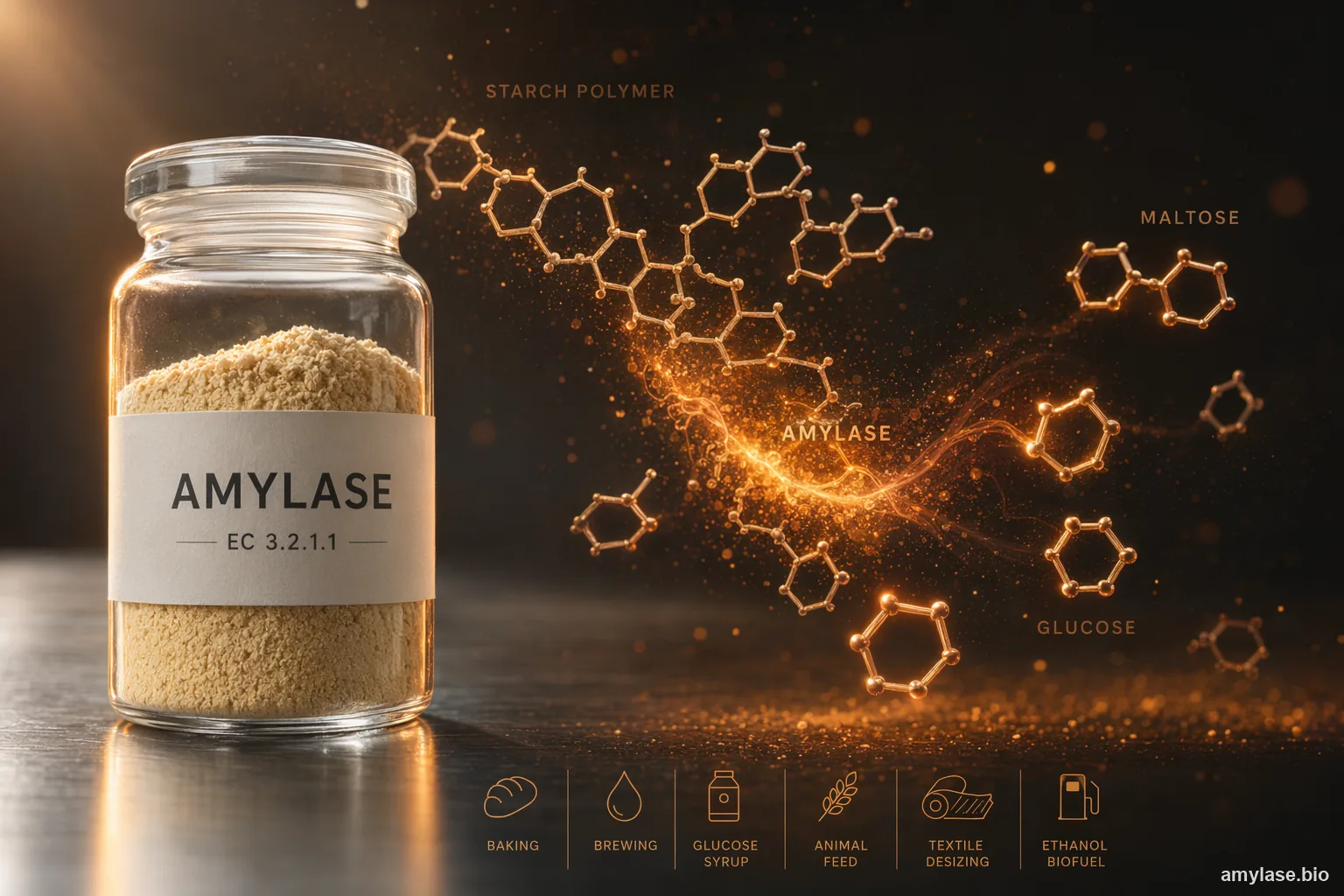
Amylase Enzyme Formula: Specification Checklist for Baking
Compare amylase enzyme specifications for baking: activity, pH, temperature, dosage, COA, TDS, SDS, pilot trials, and cost-in-use.
A practical B2B guide for bakery ingredient teams comparing industrial amylase suppliers, product formats, activity units, and process fit.
What “Amylase Enzyme Formula” Means in Industrial Baking
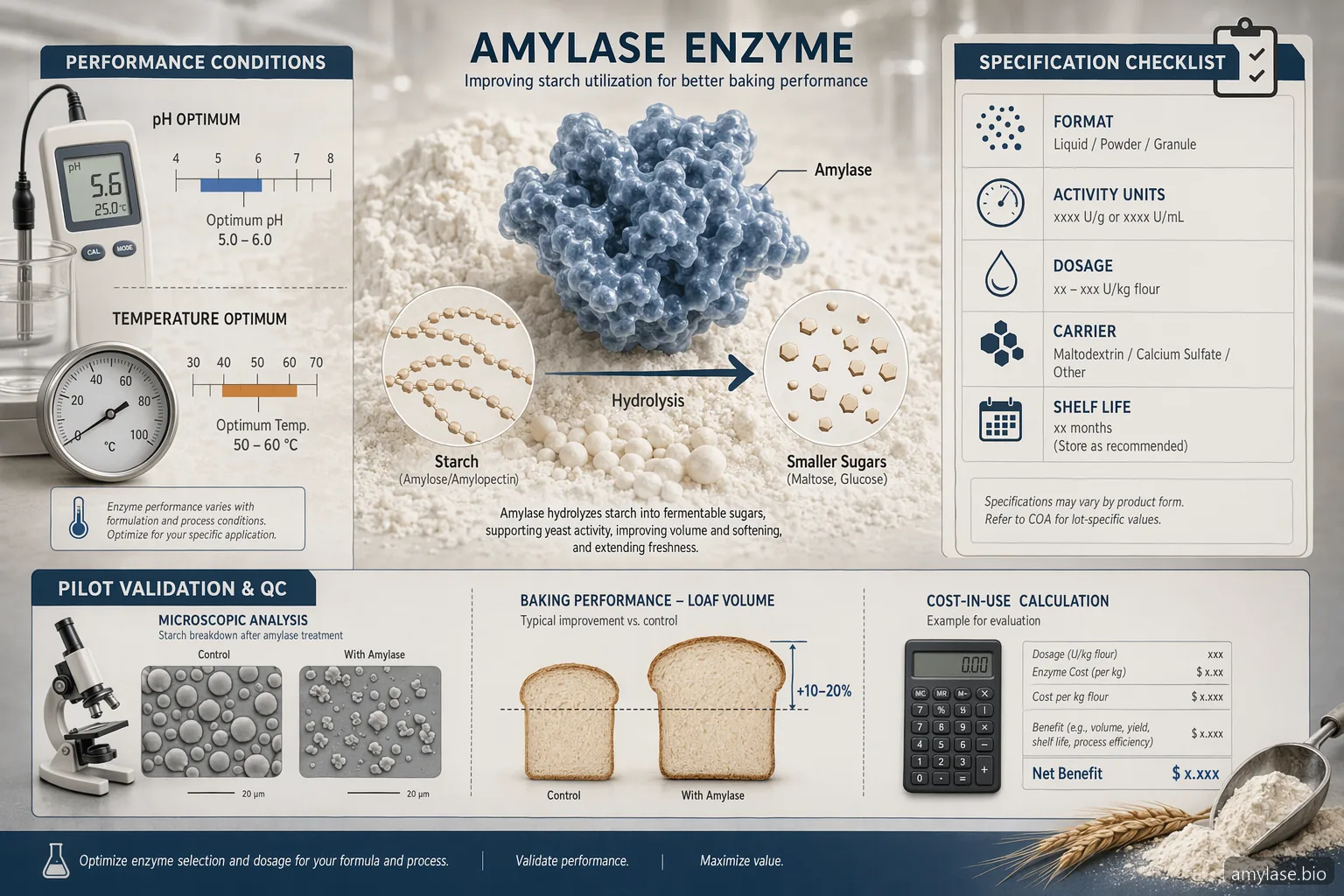
For bakery procurement and R&D teams, the phrase amylase enzyme formula should not be interpreted as a single chemical recipe. In practice, an amylase product is specified by enzyme type, activity level, fermentation or production source, carrier system, moisture, particle size or liquid concentration, stability, and recommended use rate. The enzyme amylase hydrolyzes starch into smaller dextrins and fermentable sugars, helping support yeast activity, crust color, oven spring, and crumb texture. A baking formula may use fungal amylase, bacterial alpha amylase enzyme, or a blended amylase system depending on flour quality, process time, and finished-product targets. When comparing an amylase supplier, request data that connects the product specification to your flour, dough temperature, proofing conditions, and bake profile rather than relying on generic activity numbers alone.
Define the flour type, moisture, damaged starch, and target product before comparing offers. • Check whether activity is stated in comparable units and test methods. • Confirm whether the product is powder, granule, or liquid for your dosing system.
Key Performance Conditions for Bakery Applications
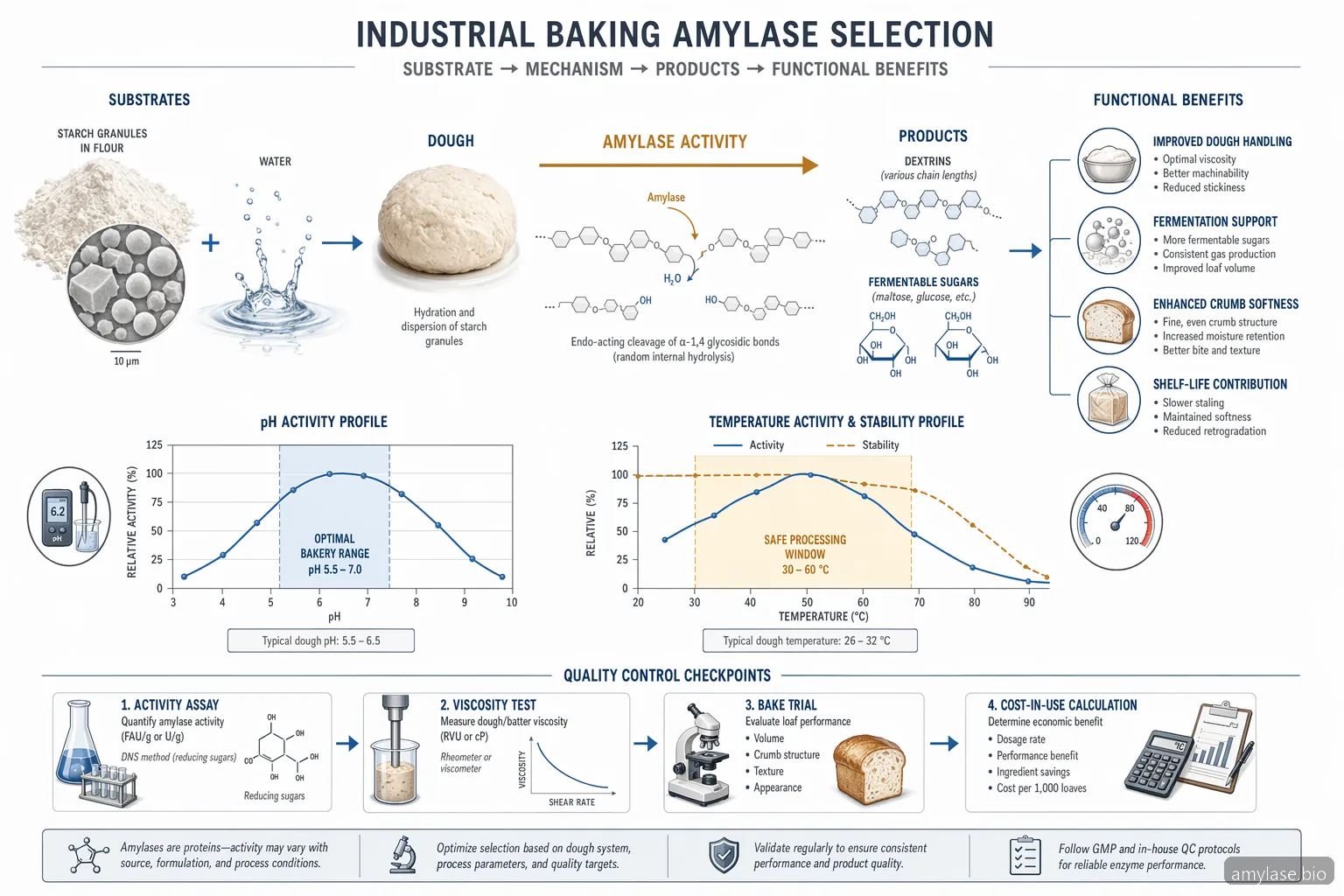
Industrial amylase selection should match the real process window. Many baking amylases operate effectively in dough systems around pH 4.5 to 6.0, while temperature exposure during mixing, proofing, and early baking determines how long the enzyme remains active. Fungal amylases are often selected where moderate activity and controlled starch breakdown are desired; thermostable bacterial amylases may require careful dosage control to avoid excessive dextrin formation and sticky crumb. Typical starting dosage bands vary widely, but bakery trials often begin in the low ppm range based on flour weight or at supplier-recommended activity units per kilogram of flour. The correct dose is not the highest activity; it is the dose that improves volume, color, softness, and shelf-life targets without causing gumminess, weak dough, or slicing problems.
Common dough pH evaluation range: approximately 4.5–6.0. • Monitor dough temperature, proof time, and bake profile during trials. • Use stepwise dosage screening rather than a single trial point. • Assess crumb tackiness and sliceability, not only loaf volume.
Specification Checklist for Comparing Suppliers
A reliable amylase enzyme comparison should start with documents and continue through plant trials. Ask each supplier for a current Certificate of Analysis, Technical Data Sheet, and Safety Data Sheet. The COA should identify lot number, activity, appearance, and relevant quality checks. The TDS should clarify application guidance, pH and temperature profile, storage conditions, shelf life, and handling recommendations. The SDS should support safe storage, dust management, and worker protection practices. If allergen, GMO, halal, kosher, country-of-origin, or regulatory-position statements are required by your customers, request them directly and verify they apply to the exact commercial grade. Do not assume that two products called amylase enzyme are interchangeable. Differences in activity assay, carrier, side activities, and granulation can affect dosing accuracy, dough behavior, and final bread quality.
Request COA, TDS, and SDS before approving a sample. • Confirm lot traceability and change notification practices. • Compare activity by method, not by number alone. • Review storage temperature, humidity sensitivity, and shelf life.
Pilot Validation and QC Tests
Pilot validation converts a paper specification into a costed processing decision. Run the candidate enzyme amylase against a control flour and, where possible, against seasonal flour variation. Keep yeast level, water absorption, mixing energy, dough temperature, proof time, and baking conditions constant so the amylase effect is measurable. Useful QC checks include farinograph or mixograph behavior, falling number, damaged starch, dough stickiness, proof height, loaf volume, crust color, crumb firmness over storage, water activity, and sensory review. For packaged bread, track softness and resilience during the intended shelf-life period. For buns or sweet goods, include symmetry, collapse, surface color, and processing tolerance. A pilot should also confirm plant dosing accuracy, dispersion, dust control for powders, pumpability for liquids, and compatibility with other enzymes and amylase blends.
Run control, low, target, and high dosage points. • Measure both fresh quality and stored-product texture. • Validate dispersion in the actual mixer or premix system. • Record negative limits such as stickiness or gummy crumb.
Cost-in-Use and Supplier Qualification
The lowest price per kilogram is rarely the lowest cost-in-use. Compare delivered activity, recommended dose, handling loss, storage stability, and performance consistency across lots. A concentrated amylase may cost more per kilogram but require less inventory, lower freight per effective dose, and simpler formulation space. Conversely, a highly active product that is difficult to dose accurately can create waste and quality risk. Supplier qualification should cover technical support, sample availability, documentation speed, batch-to-batch consistency, lead time, packaging options, and willingness to support troubleshooting during scale-up. For multi-site bakeries, confirm whether the supplier can maintain equivalent specifications across regions. A strong industrial amylase supplier should help translate enzymes and amylase data into bakery outcomes, including process robustness, reduced rework, and consistent finished-product specifications.
Calculate cost per metric ton of flour or finished product. • Include freight, storage, dilution, premix, and handling costs. • Check lead time, minimum order quantity, and packaging fit. • Require pilot approval before commercial conversion.
Technical Buying Checklist
Buyer Questions
Yes. Is amylase an enzyme? In industrial baking, amylase is an enzyme used to hydrolyze starch into smaller carbohydrates that can influence fermentation, color development, loaf volume, and crumb texture. The right product depends on flour quality, processing time, pH, temperature, and finished-product goals. Buyers should evaluate a documented industrial amylase grade, not medical or supplement products.
The primary substrate of the enzyme amylase is starch, including amylose and amylopectin fractions in flour. In bakery systems, amylase breaks starch into dextrins and sugars that can support yeast fermentation and browning reactions. The extent of hydrolysis must be controlled because excessive starch breakdown can contribute to sticky dough, gummy crumb, or poor slicing performance.
Compare suppliers by activity method, enzyme type, recommended dosage, pH and temperature profile, carrier, format, shelf life, documentation, technical support, and pilot performance. Request COA, TDS, SDS, traceability details, and change-notification practices. Then calculate cost-in-use per ton of flour or finished product after validating quality outcomes in your own process.
There is no universal dose because alpha amylase enzyme products differ in activity units, assay method, source, and stability. Bakery screening often begins at supplier-recommended low ppm levels or activity units per kilogram of flour. Run control, low, medium, and high trial points while monitoring dough handling, proofing, loaf volume, crust color, crumb softness, stickiness, and shelf-life texture.
In human digestion, the small intestine and associated pancreatic secretions involve amylase, protease, and lipase activity. However, that digestive context is different from industrial baking procurement. A bakery should specify food-processing amylase based on process performance, documentation, safety data, and regulatory suitability for the intended market, rather than using criteria for an amylase digestive enzyme supplement.
Amylase (General-Purpose)
ISO 9001 · Food Grade · HALAL · KOSHER
Frequently Asked Questions
Is amylase an enzyme used in baking?
Yes. Is amylase an enzyme? In industrial baking, amylase is an enzyme used to hydrolyze starch into smaller carbohydrates that can influence fermentation, color development, loaf volume, and crumb texture. The right product depends on flour quality, processing time, pH, temperature, and finished-product goals. Buyers should evaluate a documented industrial amylase grade, not medical or supplement products.
What is the substrate of the enzyme amylase?
The primary substrate of the enzyme amylase is starch, including amylose and amylopectin fractions in flour. In bakery systems, amylase breaks starch into dextrins and sugars that can support yeast fermentation and browning reactions. The extent of hydrolysis must be controlled because excessive starch breakdown can contribute to sticky dough, gummy crumb, or poor slicing performance.
How should a bakery compare amylase enzyme suppliers?
Compare suppliers by activity method, enzyme type, recommended dosage, pH and temperature profile, carrier, format, shelf life, documentation, technical support, and pilot performance. Request COA, TDS, SDS, traceability details, and change-notification practices. Then calculate cost-in-use per ton of flour or finished product after validating quality outcomes in your own process.
What dosage range should be used for alpha amylase enzyme in bread?
There is no universal dose because alpha amylase enzyme products differ in activity units, assay method, source, and stability. Bakery screening often begins at supplier-recommended low ppm levels or activity units per kilogram of flour. Run control, low, medium, and high trial points while monitoring dough handling, proofing, loaf volume, crust color, crumb softness, stickiness, and shelf-life texture.
Related: Amylase Enzyme for Glucose Syrup Liquefaction
Turn This Guide Into a Supplier Brief Request a baking amylase specification review, sample plan, and cost-in-use comparison for your flour system. See our application page for Amylase Enzyme for Glucose Syrup Liquefaction at /applications/amylase-glucose-syrup-liquefaction/ for specs, MOQ, and a free 50 g sample.
Contact →