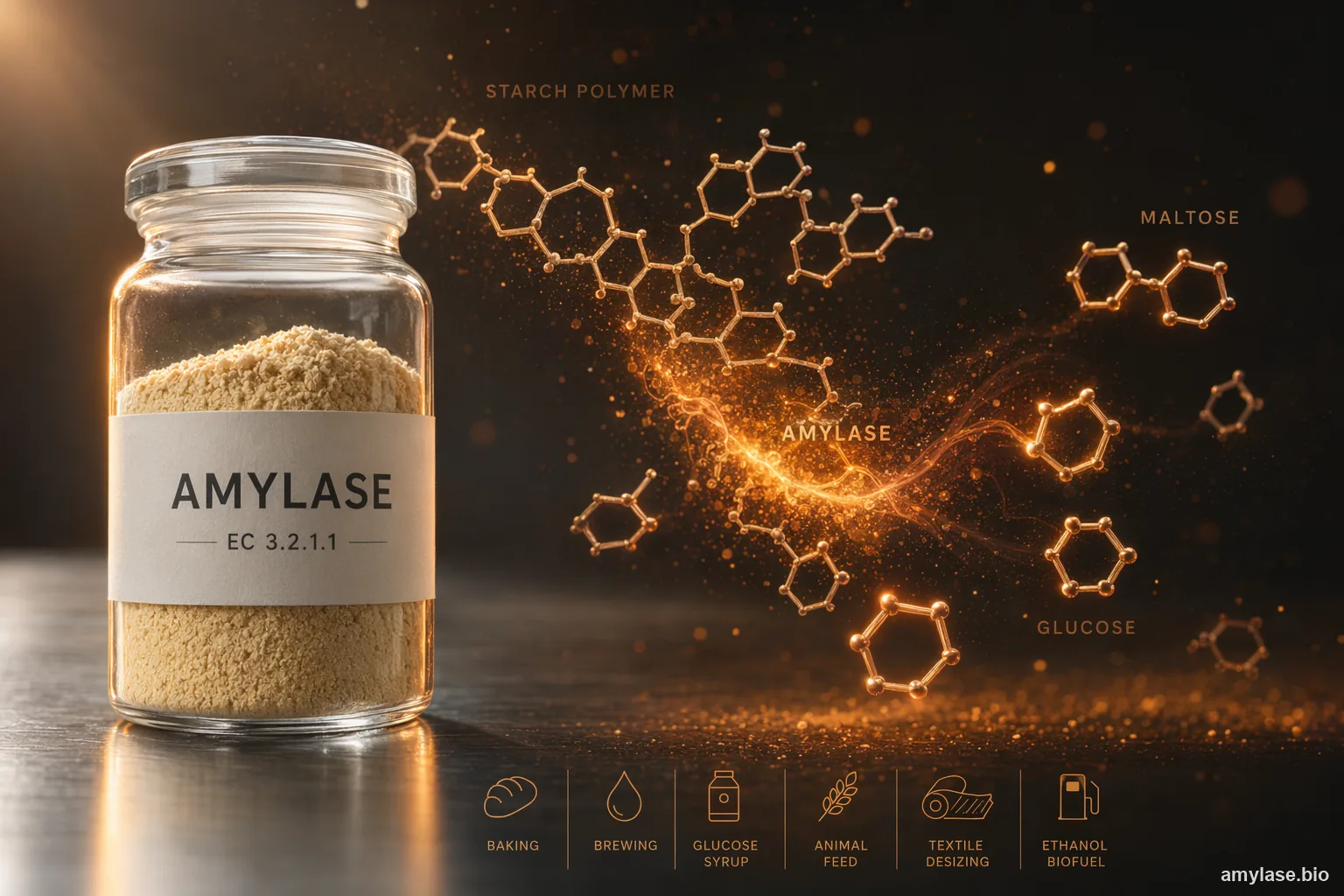
Amylase Enzyme Powder: Dosage, pH, and Temperature in Baking
Optimize amylase enzyme powder in baking with dosage, pH, temperature, QC checks, COA/TDS/SDS review, and pilot validation.
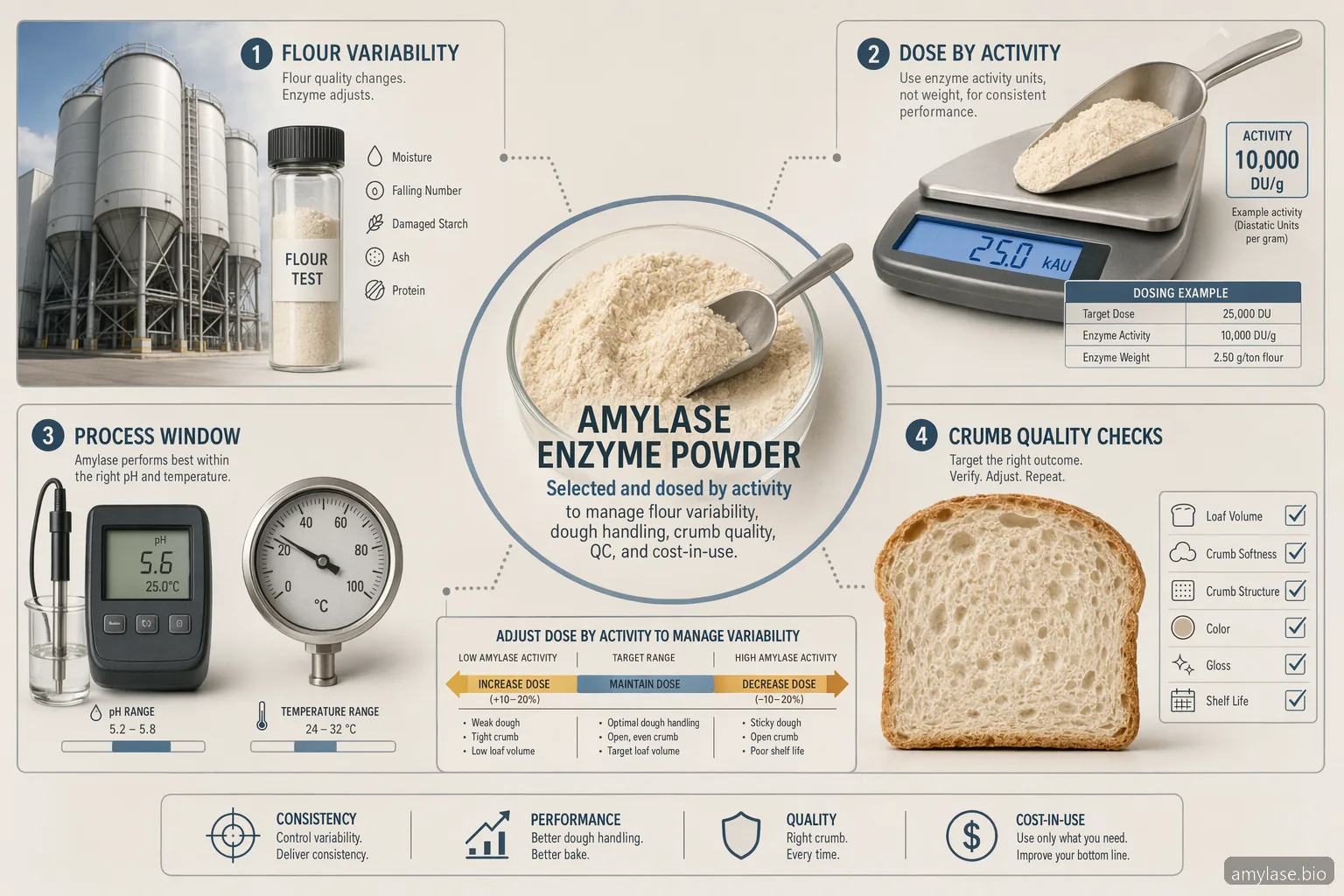
For industrial bakeries and premix manufacturers, amylase enzyme powder is a practical tool for correcting flour variability, improving dough handling, and controlling crumb quality when it is selected and dosed by activity, not guesswork.
Why Baking Plants Use Amylase Enzyme Powder
Amylase enzyme powder is used in commercial baking to convert damaged starch into fermentable sugars and dextrins. This supports yeast activity, crust color, loaf volume, and crumb softness, especially when flour quality changes by crop, mill, or storage condition. For B2B buyers, the goal is not simply to buy an enzyme amylase product, but to purchase a controlled processing aid with predictable activity, handling characteristics, and documentation. Alpha amylase enzyme is the most common starting point for bread, buns, rolls, and bakery premixes, while maltogenic or specialty amylases may be considered for shelf-life objectives. The key troubleshooting question is whether the flour is under-amylated, over-amylated, or inconsistent. Under-dosing can cause slow fermentation and pale crust; over-dosing can create sticky dough, gummy crumb, weak sidewalls, or slicing problems.
Primary substrate: starch, especially damaged starch in wheat flour • Main outputs: dextrins, maltose, and fermentable sugars • Main risks: gumminess, excessive stickiness, and variable bake response
Starting Dosage Bands and How to Adjust Them
Industrial amylase dosage should be set by activity units per kilogram of flour, because two powders with the same inclusion rate may have very different potency. As a practical pilot range, many bakeries start concentrated fungal alpha-amylase trials around 5-30 g per metric ton of flour, while lower-activity blends or premixes may be evaluated around 20-150 g per metric ton. These are screening bands, not universal recommendations. Increase dosage gradually when falling number is high, crust is too pale, proof is slow, or loaf volume is below target. Reduce dosage when dough becomes slack, divider performance worsens, crumb is wet, or slicing produces build-up. Always compare against an untreated control and against the current production standard under the same flour lot, water absorption, mixing energy, fermentation time, and bake profile.
Dose by activity units first, weight second • Change one variable per pilot run • Record flour lot, water absorption, dough temperature, and proof time • Confirm performance after 24-72 hours of finished-product storage
pH, Temperature, and Process Window
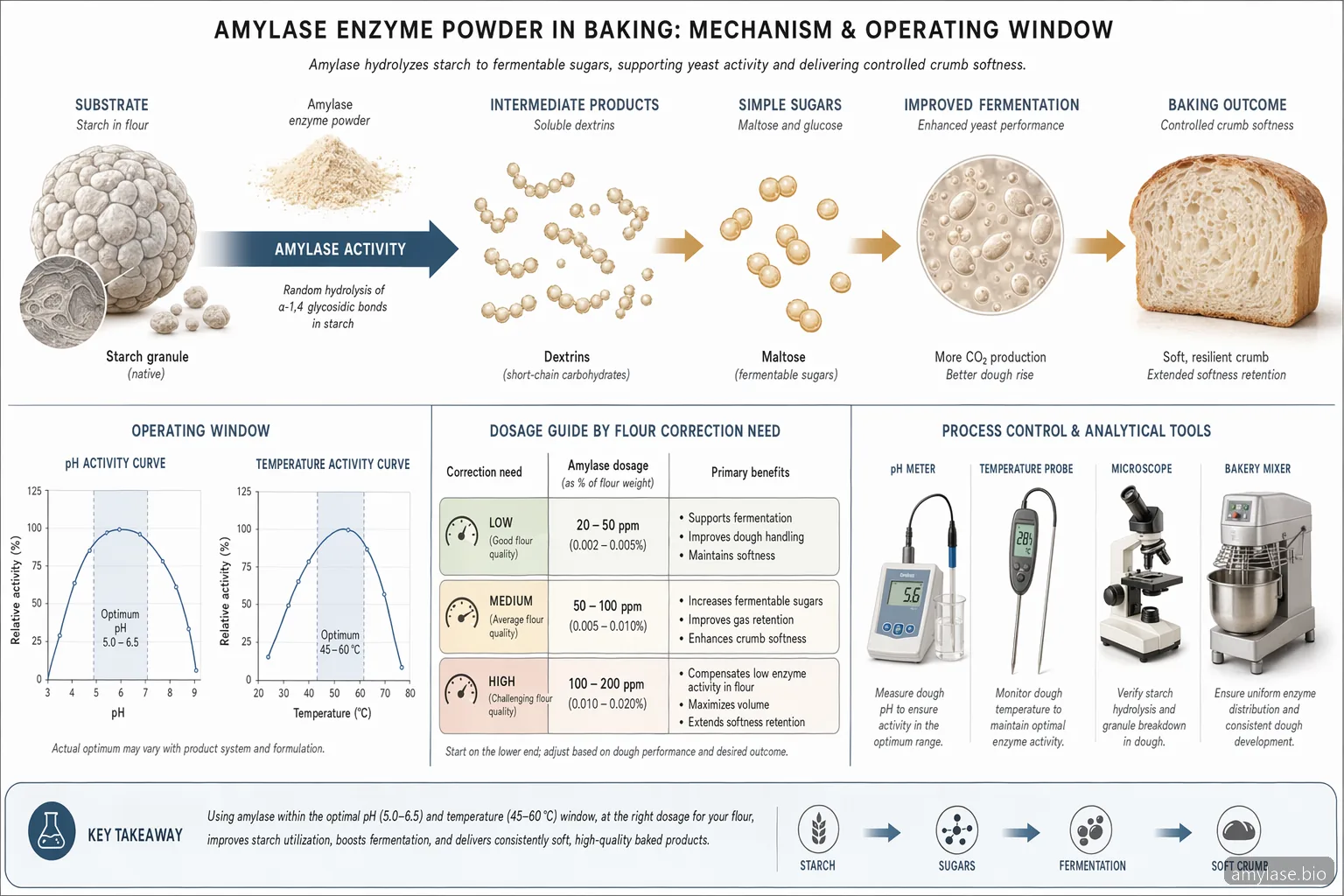
Most bread dough systems operate near pH 5.0-6.0, which is compatible with many fungal alpha-amylase enzyme products used in baking. Supplier TDS data should define the actual activity profile, because enzyme source and formulation affect performance. During mixing and proofing, dough temperatures commonly fall around 24-32°C, where amylase works slowly but meaningfully over time. During early baking, internal dough temperature rises through the range where activity accelerates, often around 45-60°C for fungal products, before heat denaturation limits further action. Some bacterial amylases tolerate higher temperatures and may require extra caution to prevent excessive liquefaction or gummy texture. Troubleshooting should therefore consider not only dose, but fermentation time, pan delay, retarder conditions, bake curve, and product geometry.
Typical dough pH target: about 5.0-6.0 • Typical dough temperature: about 24-32°C • High activity phase may occur during early oven spring • Review TDS for the exact pH and temperature profile
QC Checks for Flour and Finished Product
The best amylase program links laboratory testing to bakery outcomes. Falling number is widely used to estimate native flour amylase activity and sprout damage; lower values generally indicate higher endogenous activity. Amylograph or RVA testing can help show starch pasting and viscosity response, while damaged starch analysis explains why the same enzyme dosage may behave differently across flours. In plant trials, operators should measure dough temperature, water absorption, mixing tolerance, divider oil usage, proof height, oven spring, loaf volume, crumb moisture, crumb resilience, crust color, and slicer performance. Finished goods should be checked immediately and after storage because amylase effects may appear as softness benefits or as late gumminess. A reliable amylase supplier should help translate these QC signals into dosage and product selection decisions.
Flour checks: falling number, damaged starch, moisture, protein • Process checks: dough temperature, proof time, bake profile • Product checks: volume, crumb texture, crust color, slicing quality
Supplier Qualification and Cost-in-Use
For procurement teams, the lowest price per kilogram rarely identifies the best industrial amylase. Compare cost-in-use by activity delivered per metric ton of flour and by the value created in process stability, waste reduction, and finished-product consistency. Request a current COA for each lot, a TDS describing activity, carrier, dosage guidance, pH and temperature range, and an SDS for safe handling. Also ask for shelf-life, storage conditions, packaging options, country of origin where required, and lot traceability. Supplier qualification should include application support, sample availability, pilot validation, change notification practices, and the ability to provide consistent material over time. Before full adoption, run a controlled plant trial at normal line speed, then confirm that the formula remains stable across at least two flour lots.
Review COA, TDS, SDS, and lot traceability • Model cost per metric ton of flour, not only price per kilogram • Validate on pilot and production equipment • Confirm storage, handling, and change notification procedures
Technical Buying Checklist
Buyer Questions
Yes. Amylase is an enzyme used in baking to hydrolyze starch into smaller carbohydrates that support fermentation, color, and crumb characteristics. In B2B purchasing, the important details are enzyme type, activity units, carrier, powder handling, and validated dosage. A bakery should not evaluate amylase enzyme powder only by price per kilogram because activity strength and process performance can vary significantly between suppliers.
The substrate of the enzyme amylase is starch. In wheat flour, damaged starch is especially important because it is more accessible to enzymatic hydrolysis. Amylase breaks starch into dextrins and sugars, which can influence yeast fermentation, crust browning, loaf volume, and crumb softness. Excessive starch breakdown, however, may create sticky dough or gummy crumb, so dosage must be validated in the actual formula.
First reduce the amylase enzyme powder dosage and compare with an untreated control. Check falling number, flour damage, water absorption, proof time, and bake-out temperature. Gummy crumb can result from over-amylation, underbaking, excess water, weak flour, or extended fermentation. Review the TDS to confirm whether the product is fungal, bacterial, or maltogenic, because heat stability and performance can differ.
Many fungal alpha amylase enzyme products used in baking perform well in dough systems near pH 5.0-6.0. Dough temperatures during mixing and proofing are commonly around 24-32°C, with faster activity as the dough warms during early baking, often around 45-60°C before inactivation. Exact performance depends on enzyme source and formulation, so the supplier's TDS should guide final selection.
A common educational query asks, "the small intestine produces amylase protease and which other enzyme"; the expected digestive answer is usually lipase. That topic is separate from industrial baking. Bakery buyers should focus on enzyme amylase activity against flour starch, not human digestion. An amylase digestive enzyme product is not automatically suitable for plant-scale baking without food-processing documentation and pilot validation.
Ask the amylase supplier for a recent COA, TDS, SDS, recommended dosage basis, pH and temperature profile, storage conditions, shelf-life, lot traceability, and sample quantity for trials. Also request support for pilot design and cost-in-use calculation. Supplier qualification should confirm that the industrial amylase grade is appropriate for baking, consistently available, and compatible with your formula and process.
Amylase (General-Purpose)
ISO 9001 · Food Grade · HALAL · KOSHER
Frequently Asked Questions
Is amylase an enzyme used in industrial baking?
Yes. Amylase is an enzyme used in baking to hydrolyze starch into smaller carbohydrates that support fermentation, color, and crumb characteristics. In B2B purchasing, the important details are enzyme type, activity units, carrier, powder handling, and validated dosage. A bakery should not evaluate amylase enzyme powder only by price per kilogram because activity strength and process performance can vary significantly between suppliers.
What is the substrate of the enzyme amylase?
The substrate of the enzyme amylase is starch. In wheat flour, damaged starch is especially important because it is more accessible to enzymatic hydrolysis. Amylase breaks starch into dextrins and sugars, which can influence yeast fermentation, crust browning, loaf volume, and crumb softness. Excessive starch breakdown, however, may create sticky dough or gummy crumb, so dosage must be validated in the actual formula.
How should a bakery troubleshoot gummy crumb after adding amylase?
First reduce the amylase enzyme powder dosage and compare with an untreated control. Check falling number, flour damage, water absorption, proof time, and bake-out temperature. Gummy crumb can result from over-amylation, underbaking, excess water, weak flour, or extended fermentation. Review the TDS to confirm whether the product is fungal, bacterial, or maltogenic, because heat stability and performance can differ.
What pH and temperature are typical for alpha amylase enzyme in dough?
Many fungal alpha amylase enzyme products used in baking perform well in dough systems near pH 5.0-6.0. Dough temperatures during mixing and proofing are commonly around 24-32°C, with faster activity as the dough warms during early baking, often around 45-60°C before inactivation. Exact performance depends on enzyme source and formulation, so the supplier's TDS should guide final selection.
What should buyers request from an amylase supplier before approval?
Ask the amylase supplier for a recent COA, TDS, SDS, recommended dosage basis, pH and temperature profile, storage conditions, shelf-life, lot traceability, and sample quantity for trials. Also request support for pilot design and cost-in-use calculation. Supplier qualification should confirm that the industrial amylase grade is appropriate for baking, consistently available, and compatible with your formula and process.
Related: Amylase Enzyme for Glucose Syrup Liquefaction
Turn This Guide Into a Supplier Brief Request a baking amylase sample, TDS review, and pilot dosage plan for your flour system. See our application page for Amylase Enzyme for Glucose Syrup Liquefaction at /applications/amylase-glucose-syrup-liquefaction/ for specs, MOQ, and a free 50 g sample.
Contact →