Hard, Pale or Uneven Dried Sweet Potato: Fixing the Bite With an Enzyme Soak Before Steaming
How plants use a heat-tolerant alpha-amylase soak before steaming to soften dried sweet potato: line order, two label doses, failure modes and what to email us.
A batch of dried sweet potato that comes out hard, pale or different from tray to tray is a batch you sell at a discount or not at all. The hard, chewy bite comes from starch retrogradation in the dried strips, and an enzyme step in the soak is used to reduce it. The tool is a heat-tolerant liquid alpha-amylase developed specifically for dried sweet potato production, with one stated aim: to soften the finished strips. This page shows how plants run that step, and which line details to email us so we can match a format and a dose to your plant.
What the enzyme step changes
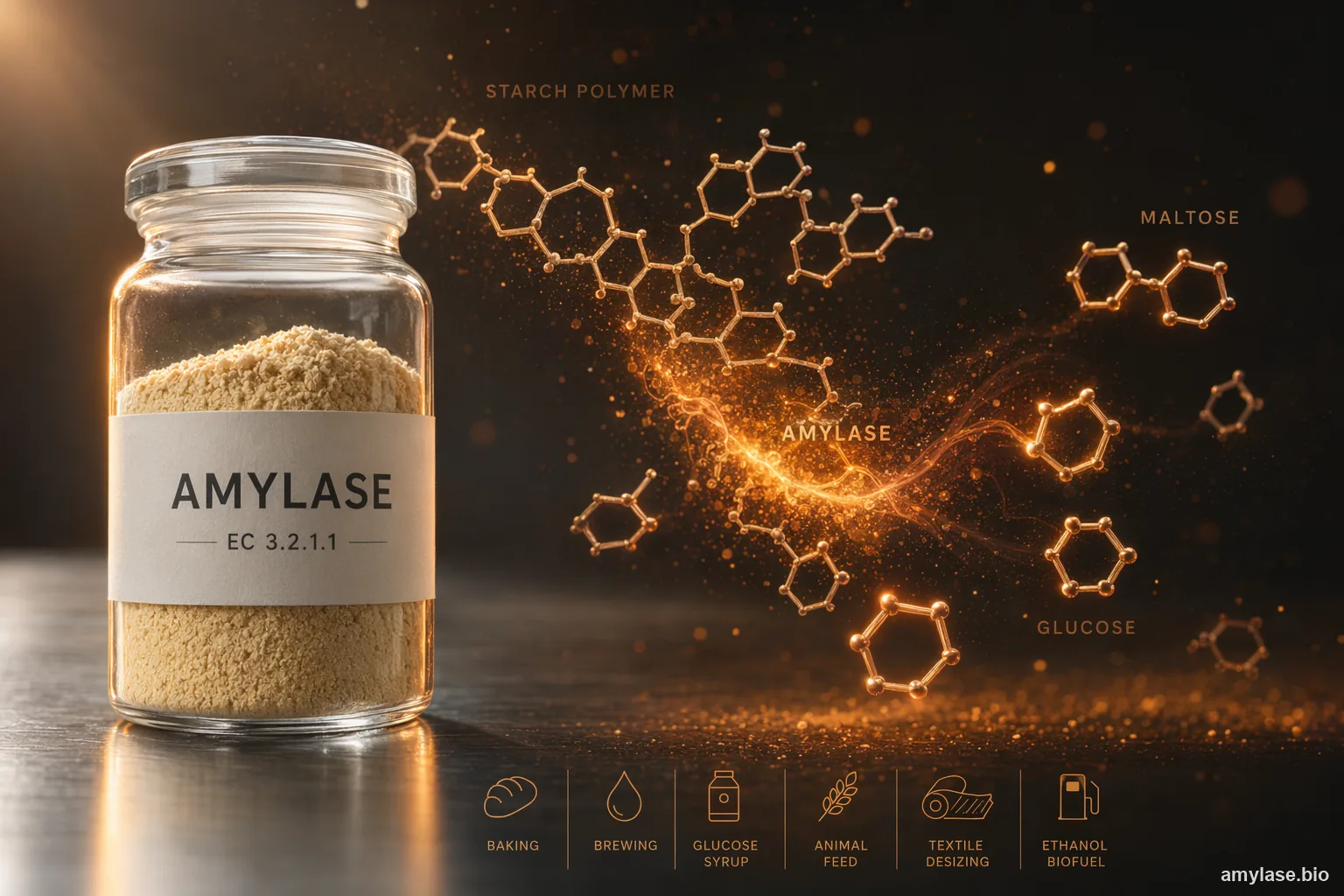
The enzyme rapidly cuts the starch chains at random points into short dextrins of mixed length, plus a small amount of oligosaccharide and glucose. Less intact starch means less material that can set hard after drying, and the small sugars left behind taste sweet. Plants run the step for four results.
Softer strips, a shorter sugar-soaking time and less loss of nutrients during the soak. • More sweetness and a stronger natural colour in the finished product. • Less of the starch retrogradation that turns dried sweet potato hard and chewy. • A strip made with the enzyme process that is softer, keeps a pleasant resilient chew and tastes better.
Softness protects your price, and a shorter sugar soak frees tank time. Confirm each result in a pilot batch on your own potatoes before you change the full line. The same enzyme step is used widely for peeled roasted sweet potato as well as for dried strips.
How plants run it
The line runs in this order: pretreatment (wash, peel, cut into strips), then a soak or a vacuum sugar-pot enzyme step, then steaming, drying, a second steaming, a second drying, vacuum packing and finished product. The enzyme goes in at the soak or in the vacuum sugar pot, before the first steaming. The washed and sliced potato is weighed and covered with a few times its weight of water, and the measured enzyme is stirred into that water first so it is evenly mixed. Warm water gives a better soak than cold tap water, and the slices go from the soak straight to the steamer. The enzyme is built for heat: its effective range is 70-100 C, with an optimum of 75-95 C, so it keeps working as the slices heat up.
Some plants add a step before any of this: they pile the raw sweet potatoes at 10-15 C for 15-25 days first, so that the potato sweetens naturally before it is washed and sliced. After the storage pile comes a warm soak with the enzyme in the water, then steaming.
Two formats, two label doses
The two formats side by side, the format dosed by weight first and the liquid dosed by volume second:
Recommended dose per tonne: 10-15 kg; 1-2 L • Working temperature: 80-100 C; 70-100 C effective, 75-95 C optimum • Working pH: 4.5-7.0; 4.5-7.0 effective, 5.0-6.0 optimum • Step before the soak: storage pile at 10-15 C for 15-25 days; wash, peel and cut into strips • Packs: 1 kg bottle; 1 kg bottle or 25 kg drum • Shelf life: 12 months; 12 months
The first format is dosed by weight, at a recommended 10-15 kg per tonne. The second is dosed by volume, at a recommended 1-2 L per tonne. Neither label states per tonne of what, so confirm the basis with us by email before you dose. These two figures are not a strength comparison: the preparations differ and are measured in different ways, so never carry one format's dose across to the other. Both are starting ranges, because variety, drying process and process settings all differ from plant to plant, and the best dose is fixed by trial.
What goes wrong, and why
1. Soft in one lot, tough in the next: the raw potato changed, and because variety and process differences move the best dose, it has to be set by trial and not copied from another plant. • 2. Enzyme added unevenly: stir the measured enzyme into the soak water first and mix it well, then add the slices. • 3. Still hard after the enzyme step: a cold soak works less well than a warm one, and the enzyme needs the heat of steaming to reach its working range. • 4. Pale, low-sweetness product: potatoes processed with no storage time have not had the chance to sweeten naturally, which is what the storage pile is for. • 5. A new delivery looks a different shade of brown: the colour of the liquid varies from batch to batch and does not affect performance. • 6. Enzyme lost strength in the store room: it is a biologically active product, to be kept cool, dry and out of sunlight.
What to tell us when you email
Tell us your sweet potato variety and whether it is stored before processing, your batch size, your soak (water temperature, time, open tank or vacuum pot), whether you steam and dry once or twice, and the fault you want to fix. Email us those line conditions and ask for a sample and a matched dose: we will reply with the format that fits and a starting dose for your pilot trial.
Amylase (General-Purpose)
ISO 9001 · Food Grade · HALAL · KOSHER
Frequently Asked Questions
Where does the enzyme go in a dried sweet potato line?
The enzyme goes in at the soak or in the vacuum sugar pot, before the first steaming. The washed and sliced potato is weighed and covered with a few times its weight of water, and the measured enzyme is stirred into that water first so it is evenly mixed.
How much enzyme is used per tonne?
The first format is dosed by weight, at a recommended 10-15 kg per tonne. The second is dosed by volume, at a recommended 1-2 L per tonne. Neither label states per tonne of what, so confirm the basis with us by email before you dose.
Why is the dried sweet potato still hard after the enzyme step?
A cold soak works less well than a warm one, and the enzyme needs the heat of steaming to reach its working range.
Why do some plants store sweet potatoes before processing?
They pile the raw sweet potatoes at 10-15 C for 15-25 days first, so that the potato sweetens naturally before it is washed and sliced.
What should I send to get a matched dose?
Tell us your sweet potato variety and whether it is stored before processing, your batch size, your soak (water temperature, time, open tank or vacuum pot), whether you steam and dry once or twice, and the fault you want to fix. Email us those line conditions and ask for a sample and a matched dose: we will reply with the format that fits and a starting dose for your pilot trial.
Making dried sweet potato?
Tell us your sweet potato variety and whether it is stored before processing, your batch size, your soak (water temperature, time, open tank or vacuum pot), whether you steam and dry once or twice, and the fault you want to fix. Email us those line conditions and ask for a sample and a matched dose: we will reply with the format that fits and a starting dose for your pilot trial.
Contact →